Instagram and Facebook Ad Formats for Fashion Brands 2027
A definitive technical and creative blueprint for apparel, accessories, and footwear merchants navigating Meta's evolving Advantage+ ecosystem, short-form video algorithms, catalog integrations, and peak seasonal campaign scaling.
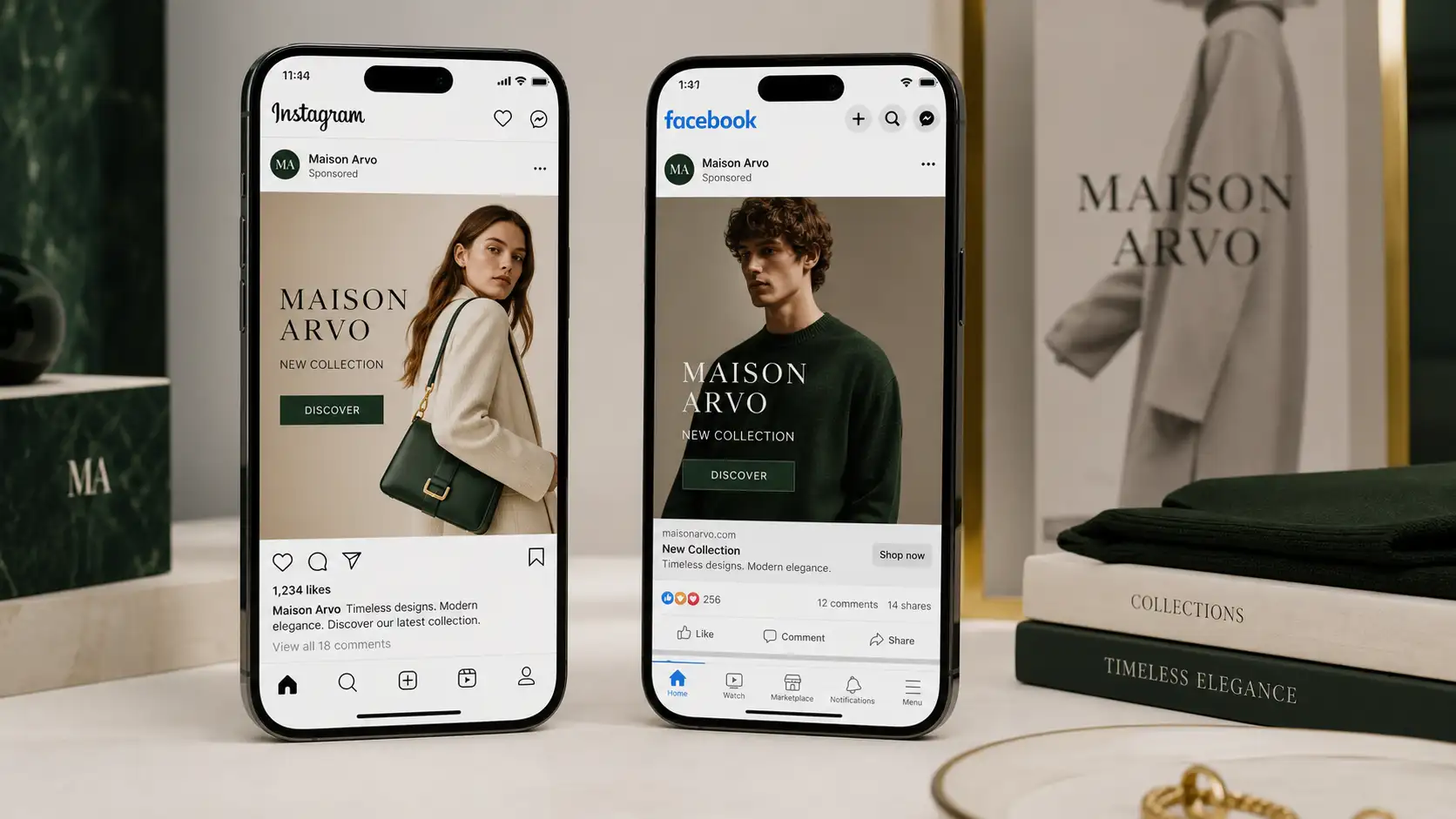
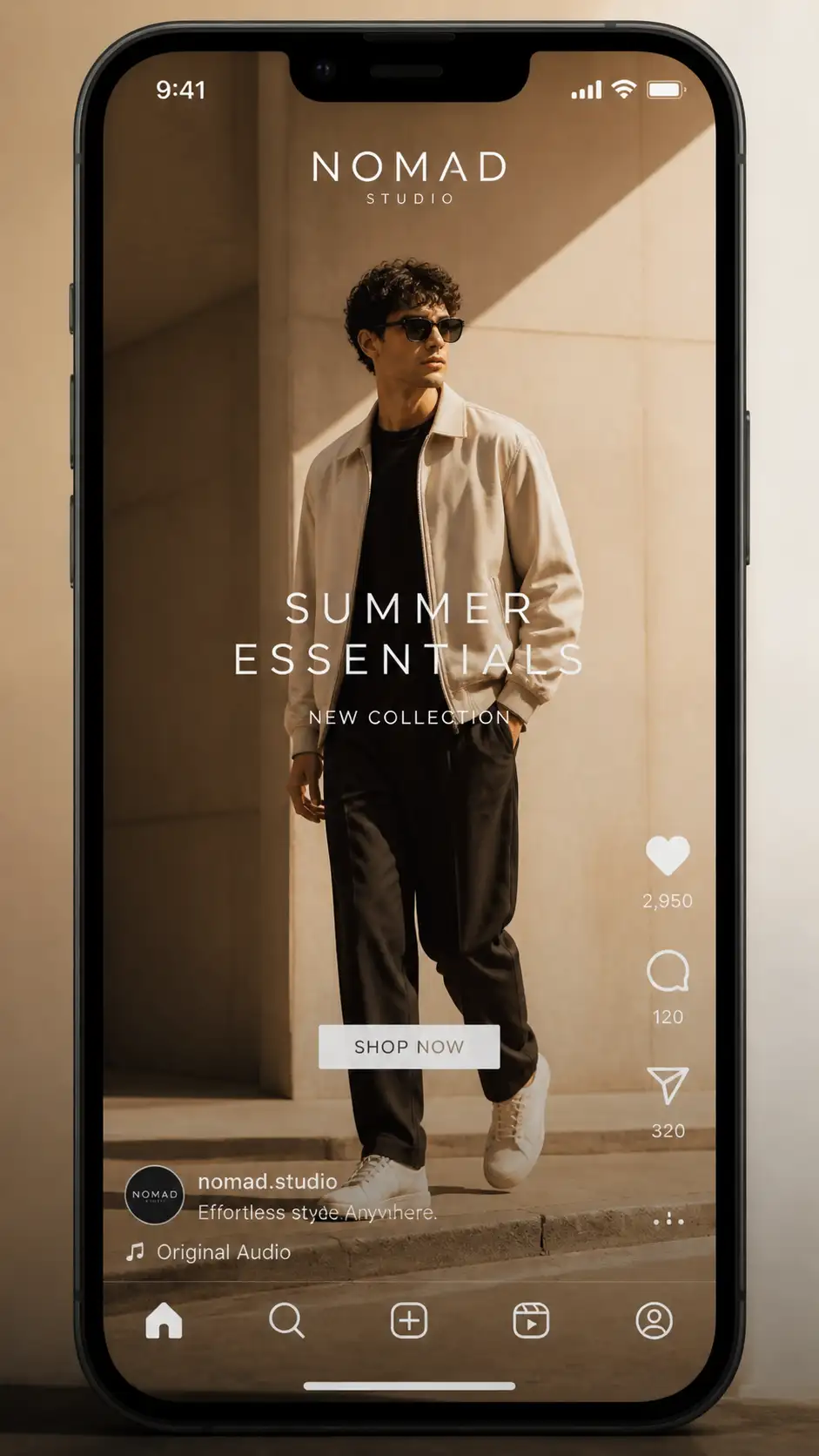
- Short-Form Video Dominance: 9:16 vertical video across Reels and Stories remains the primary vehicle for customer acquisition, demanding native mobile framing and immediate visual hooks.
- Algorithmic Catalog Evolution: Advantage+ Catalog Ads paired with dynamic rich cards now capture more than 40% of bottom-funnel conversions when synced with real-time inventory feeds.
- Unit Economics Matter: With shifting Facebook ads rate dynamics, apparel brands must counter higher CPMs by improving on-site conversion rates and leveraging WhatsApp post-purchase channels.
- Full-Funnel Commerce Integration: Direct integration between Meta ads and modern ecommerce infrastructure like GoHato enables automated catalog syncing, instant sizing guides, and zero-leakage checkouts.
1. The 2027 Meta Landscape: Algorithmic Merchandising
Fashion commerce on Meta platforms in 2027 has transitioned from micro-demographic interest targeting into an era of purely creative-driven algorithmic merchandising. Meta's Lattice architecture and generative discovery engines analyze visual textures, styling aesthetics, and video narrative cues rather than manual interest tags. For modern direct-to-consumer apparel, footwear, and accessory labels, the ad creative is no longer just the wrapper—it is the targeting parameter itself.
When launching ads for fashion, brands face a consumer base conditioned by hyper-curated feeds, instantaneous mobile gratification, and zero tolerance for disjointed mobile experiences. A garment shown on Instagram Stories must translate into a frictionless storefront experience in milliseconds. Whether a shopper clicks through to an interactive catalog or initiates a direct dialogue through WhatsApp, any friction in catalog loading, sizing selection, or checkout creates immediate bounce.
In this environment, winning fashion brands decouple their strategy from static one-size-fits-all campaigns. They deploy synchronized multi-format clusters: vertical video assets capturing aesthetic drape and movement, interactive carousels providing deep fabric inspection, and Advantage+ shopping campaigns delivering real-time SKU availability directly to high-intent shoppers.
2. Creative Anatomy: Designing High-Converting Ads for Fashion
Successful apparel advertising demands a distinct visual grammar. Unlike commodity SaaS or utilitarian hardware, apparel purchases are deeply emotional, personal, and identity-driven. Yet, emotional connection alone does not ensure profitability when customer acquisition costs fluctuate. Every fashion asset must balance brand prestige with rigid direct-response anatomy.
The 0–2s Aesthetic Arrest
The visual hook must establish drape, silhouette, or distinct styling within 24 frames. Avoid slow logo fades; prioritize sudden movement, tactile fabric close-ups, or unboxing reveals.
Fit & Body Context
Shoppers abandon fashion ads when garment proportions remain ambiguous. Show models of varied builds walking, sitting, and turning to resolve sizing hesitation before the click.
Tactile Fabric Telemetry
Macro close-ups highlighting texture—linen weave, raw denim twill, modal softness—simulate the in-store physical touchpoint that digital commerce lacks.
Transparent Social Proof
Incorporate authentic styling commentary, creator try-on reactions, and real customer size callouts directly over video frames using native typographic styling.
When evaluating campaign performance across global fashion accounts, creative fatigue emerges as the single largest driver of rising ad rates. Creative teams cannot rely on a single photoshoot for an entire quarter. Modern direct-to-consumer apparel founders, such as those studying how to start a clothing brand online in India or scaling internationally, must maintain an iterative creative sprint that outputs 8 to 12 modular visual permutations every week.
3. Video Size Facebook Ads and Technical Specifications
Incorrect technical execution degrades ad delivery before your audience ever sees the garment. Meta's auction penalty system de-prioritizes ads with poor compression artifacts, black-bar letterboxing, or critical text elements hidden beneath interface overlays. Adhering to exact parameters for video size facebook ads guarantees maximum visual clarity and auction efficiency across Instagram Reels, Facebook Feed, and mobile partner networks.
| Placement Surface | Aspect Ratio | Resolution (Pixels) | Max File Size | Safe Zone Guardrails |
|---|---|---|---|---|
| Instagram Reels & Stories | 9:16 (Vertical) | 1080 × 1920 px | 4 GB (Keep < 250MB) | Top 14% (account handle) & bottom 20% (caption/CTA) must stay clear of text |
| Facebook & IG In-Feed Video | 4:5 (Vertical) or 1:1 (Square) | 1080 × 1350 px (4:5) 1080 × 1080 px (1:1) |
4 GB | Center all typographic elements; avoid borders that trigger automated re-cropping |
| Advantage+ Catalog Video | 1:1 (Square) | 1080 × 1080 px | 1 GB | Garment must fill 75% of viewport; keep background monochromatic or neutral ivory |
| Desktop Feeds & In-Stream | 16:9 (Landscape) | 1920 × 1080 px | 4 GB | Reserved primarily for cinematic seasonal brand drops or long-form styling narratives |
Technical Pro Tip: Always export video files utilizing MP4 or MOV wrappers encoded with H.264 video codec and AAC audio at 30 to 60 frames per second. Ensure color profile is calibrated to sRGB. Exporting in Rec.2020 or HDR often triggers erratic color banding when re-compressed by Meta's ingest servers, turning rich emerald or ivory fabric shades dull or muddy.
4. Complete Breakdown of Core Fashion Ad Formats
Building a scalable fashion ad account requires deploying distinct ad formats matched specifically to customer intent stages. In 2027, relying solely on single-image static ads guarantees declining ROAS. Here is the operational architecture of top-tier apparel ad formats.
A. Advantage+ Catalog Ads (Formerly Dynamic Product Ads)
Advantage+ Catalog Ads (ASC+ Catalog) represent the automated backbone of fashion prospecting and retargeting. When integrated with an active product catalog, Meta leverages machine learning to match specific dresses, shirts, or accessories to consumers demonstrating real-time behavioral affinity for similar silhouettes.
- Dynamic Category Overlays: Include branded price badges, "Best Seller" tags, or remaining inventory alerts dynamically mapped from your store's backend.
- Multi-Angle Product Cards: Instead of flat packshots on sterile white backgrounds, configure primary catalog cards to feature on-model lifestyle images that slide smoothly into alternate garment angles upon hover.
- Dynamic Description Automation: Pull customer review snippets or fabric composition notes (e.g., "100% Breathable Organic Cotton") directly into ad copy fields.
B. Interactive Carousel Ads & Lookbook Sequences
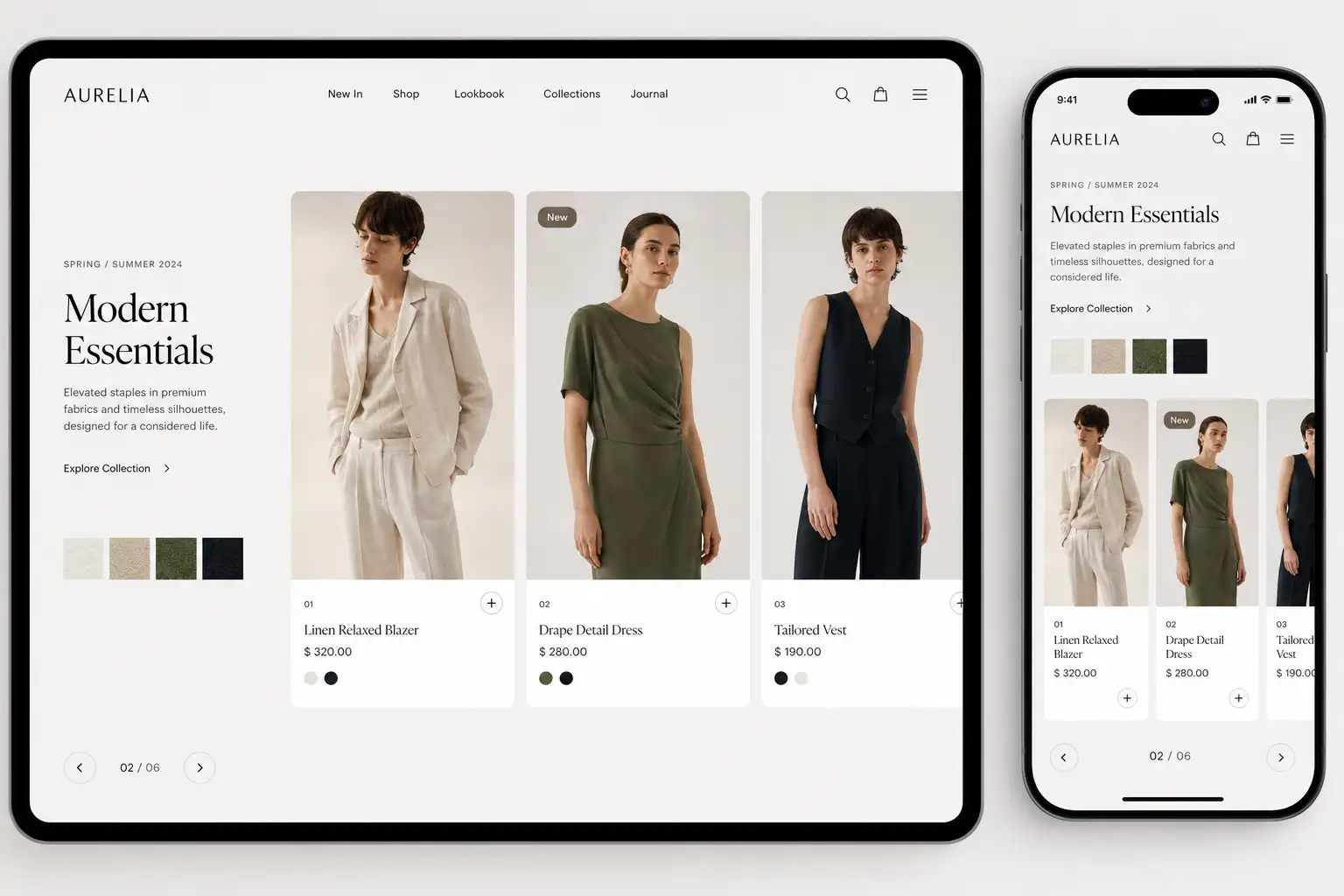
Carousel ads provide fashion brands with an editorial canvas. Rather than presenting isolated items, high-performing carousels function as interactive lookbooks that educate customers on styling multiple items together.
- The "Complete the Look" Carousel: Card 1 showcases the full styled outfit (blazer, trousers, boots). Cards 2 through 4 display individual constituent SKUs with direct product links. This format consistently increases Average Order Value (AOV) by 28% to 42%.
- Colorway Showcase: Dedicate an entire carousel to a single core silhouette presented across multiple seasonal colorways, addressing customer aesthetic preferences without cluttering feed inventory.
- The Narrative Capsule: Sequential panels that walk the shopper through fabric sourcing, atelier craftsmanship, model fit details, and customer reviews.
C. Collection Ads & Instant Experiences
Collection ads marry a hero video or image with an interactive grid of four product cards positioned directly underneath. When tapped, the ad immediately opens an Instant Experience—a lightning-fast, full-screen digital micro-store embedded inside Instagram or Facebook that loads up to 10 times faster than an external mobile web page.
Within this Instant Experience, shoppers can explore lookbooks, watch embedded styling videos, check product variants, and browse sizing charts before clicking out to finalize payment. For luxury, ethnic wear, and designer streetwear brands where visual storytelling justifies higher ticket prices, Collection ads regularly yield 35% higher return on ad spend than standalone single-image creatives.
D. Click-to-WhatsApp Conversational Ad Formats
A transformative shift in global and domestic fashion marketing is the rapid growth of Click-to-WhatsApp ads. Rather than pushing traffic to a traditional web landing page, these ads route interested shoppers directly into an interactive WhatsApp conversation.
In markets where apparel purchases involve sizing uncertainty, custom tailoring inquiries, or Cash on Delivery (COD) payment preferences, conversational ads eliminate friction. When powered by modern commerce platforms such as GoHato—which integrates official Meta Cloud API WhatsApp CRM capabilities—automated workflows instantly send product catalogs, answer sizing queries, share customer styling reviews, and recover abandoned shopping checkouts directly within the chat thread.
5. Facebook Ads Rate & Industry Benchmarks in 2027
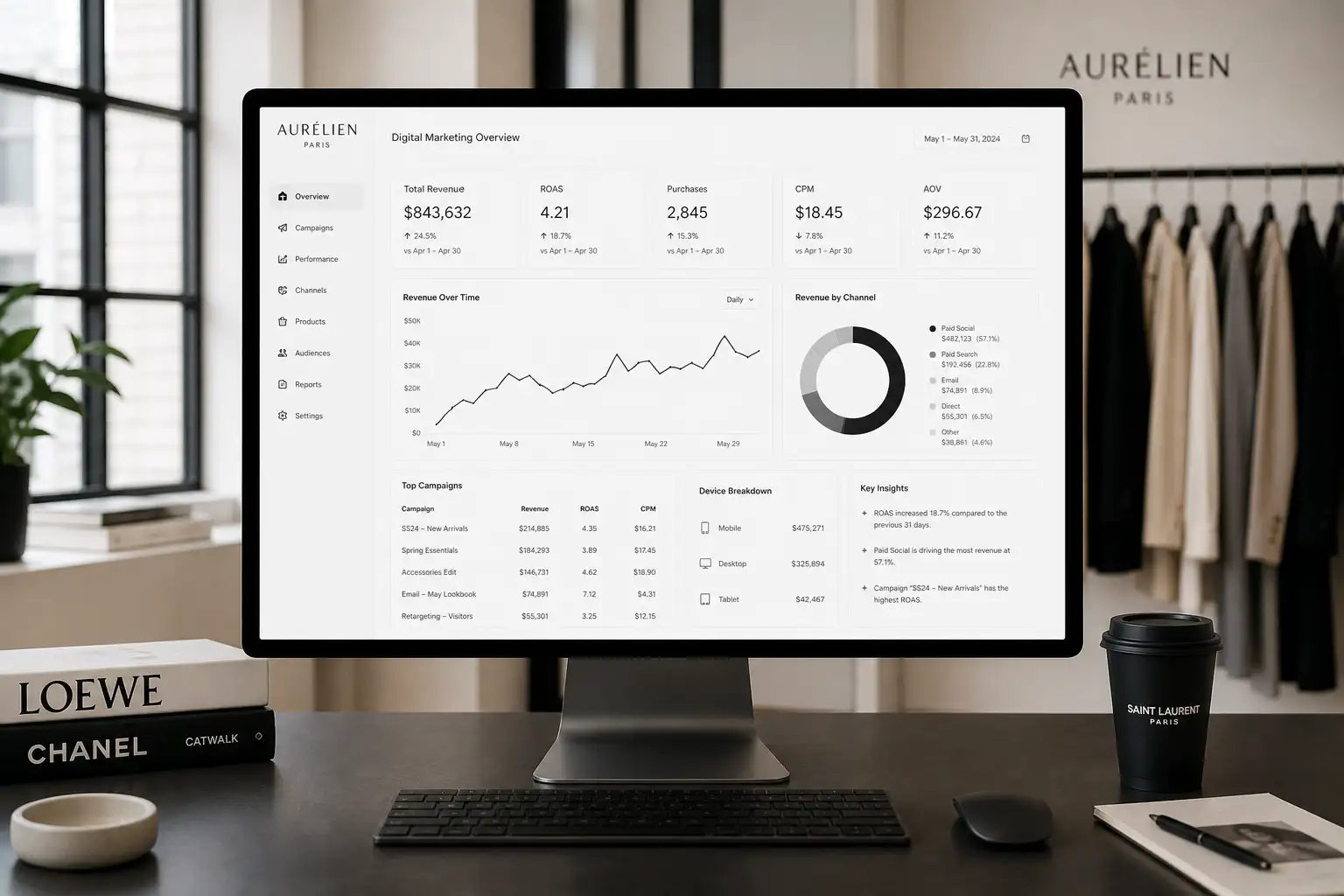
Financial discipline distinguishes enduring fashion labels from those that collapse when ad auctions tighten. Understanding your target facebook ads rate, cost-per-mille (CPM), click-through rate (CTR), and blended customer acquisition cost (CAC) allows media buyers to identify conversion bottlenecks instantly.
| Ad Metric | Global Baseline (USD) | India Market Baseline (INR) | Top-Quartile Fashion Performance |
|---|---|---|---|
| CPM (Cost Per Mille) | $14.00 – $26.00 | ₹180 – ₹380 | Under $11.00 / Under ₹150 (Driven by high creative watch-time) |
| CPC (Cost Per Click) | $0.65 – $1.45 | ₹6.50 – ₹18.00 | Under $0.45 / Under ₹5.00 |
| CTR (Link Click-Through) | 1.20% – 1.85% | 1.40% – 2.40% | Above 2.80% on 9:16 Video & Carousels |
| Storefront CVR | 1.80% – 2.90% | 2.20% – 3.80% | Above 4.20% with fast mobile UI & instant checkout |
| Average Blended ROAS | 2.1x – 3.2x | 2.8x – 4.5x | Above 5.0x for established collections |
Ad rates vary significantly based on seasonal liquidity, auction competition, and demographic saturation. During standard off-peak months (February through August), CPMs remain relatively predictable. However, as the retail calendar approaches Q4, ad auction competition increases dramatically, requiring brands to calibrate their margin preservation frameworks accordingly.
Margin Preservation and Contribution Economics
Apparel founders often make the fatal mistake of chasing gross ROAS while ignoring net contribution margins. High return rates (ranging from 18% to 35% in online apparel due to sizing mismatches and COD rejections) can erode nominal ad profits. To maintain true enterprise health:
- Incorporate Return Allowance: Calculate real net CAC after factoring in estimated reverse-logistics shipping costs and restock depreciation.
- Focus on Second-Order Value: Measure 60-day and 90-day repeat purchase velocity. A first-order ROAS of 1.8x becomes highly lucrative if automated email and WhatsApp post-purchase sequences convert 30% of buyers into repeat full-price customers within eight weeks.
- Maintain Fixed Overhead Discipline: Avoid over-indexing on third-party SaaS plugin subscriptions that charge percentage-based checkout fees on top of your media spend.
6. Black Friday Facebook Ads & Peak Season Scaling Blueprint
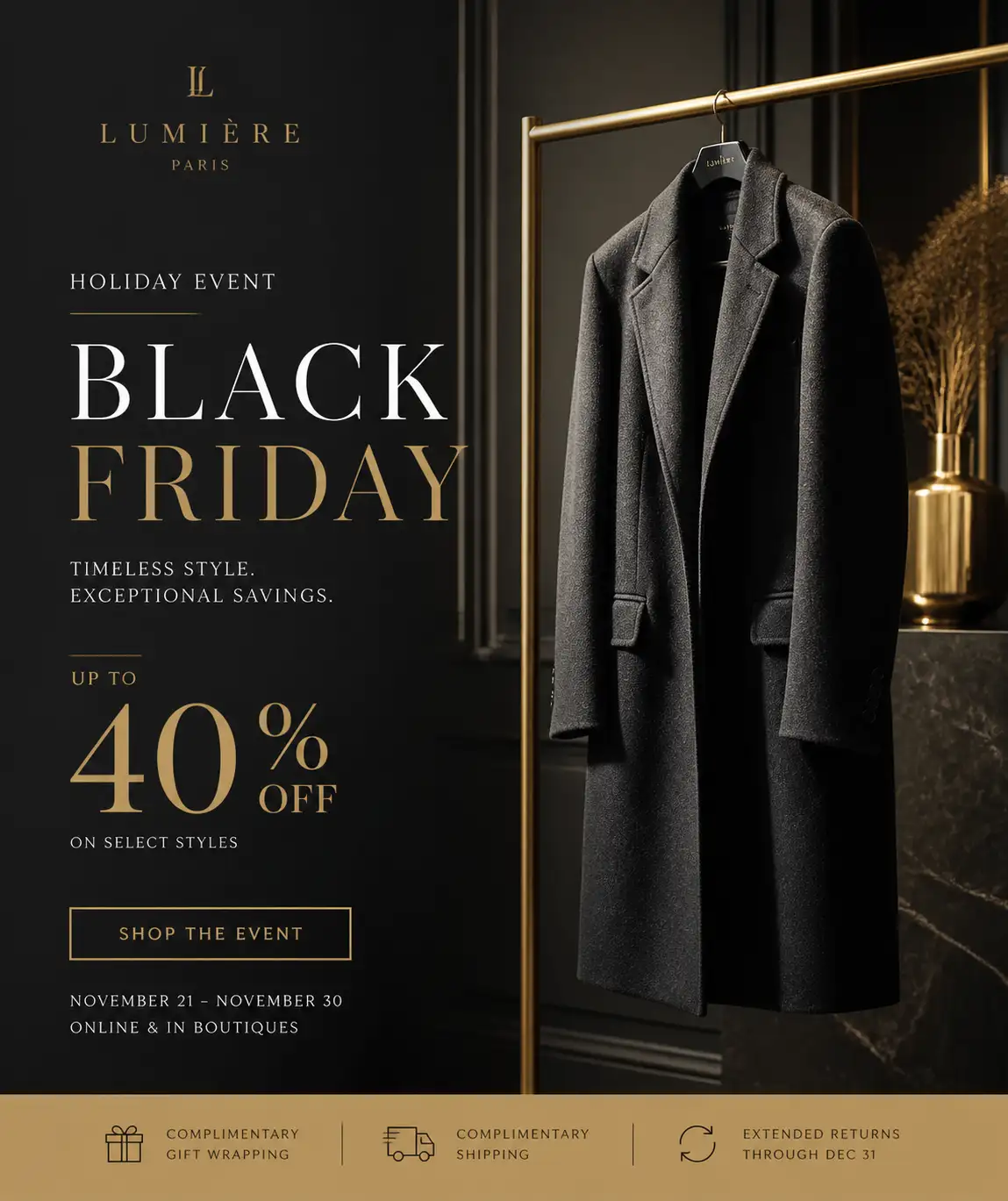
The Q4 holiday window represents the highest-revenue period for fashion retail, but it is also the most unforgiving. During November, Meta ad auctions absorb massive capital influxes from multinational consumer brands, causing CPM rates to surge by 60% to 140%. Brands that run generic discounting campaigns during this period face rapid margin erosion. Mastering black friday facebook ads requires a disciplined four-stage operational rollout.
Phase 1: Audience Seeding (Oct 15 – Nov 10)
Deploy low-cost video engagement and Lead Generation ads to build first-party VIP waitlists. Capture customer phone numbers and emails before auction CPMs spike.
Phase 2: Private Early Access (Nov 11 – Nov 20)
Unveil private collection drops to waitlist members via automated WhatsApp broadcasts and closed-access storefront URLs, generating strong early cash flow at zero marginal ad cost.
Phase 3: The Public Blitz (Black Friday Week)
Shift Meta ad spend aggressively into Advantage+ Shopping Campaigns targeting consolidated broad audiences with dynamic catalog tiers and gift-with-purchase structures.
Phase 4: Retargeting & Cyber Monday (Nov 30 – Dec 5)
Deploy high-urgency countdown carousels and "Last Chance" video creatives to re-engage shoppers who viewed specific garments or abandoned checkouts during the blitz.
Creative Best Practices for Peak Season Apparel Ads
During Black Friday, feed noise is deafening. Overcoming ad blindness requires bold, uncluttered creative treatments:
- Bundle-Focused Creative Cards: Instead of discounting single items by 20%, market curated bundles: "The Winter Layering Capsule: 3 Pieces for $149" or "Complete Festive Wardrobe Box at ₹4,999." Bundles increase basket size and absorb elevated customer acquisition costs.
- Inventory Scarcity Real-Time Overlays: Integrate dynamic tags that reflect low stock levels ("Only 14 units left in Size M") to accelerate checkout intent.
- Transparent Shipping Deadlines: Feature guaranteed holiday delivery cutoff dates prominently in ad captions and secondary overlay banners.
7. Technical Infrastructure: Connecting Meta Ads to GoHato
The most polished ad creative cannot generate profit if your ecommerce platform suffers from slow server response times, misfiring tracking pixels, or high cart abandonment rates. In modern commerce, your media buying strategy and your storefront infrastructure must operate as a unified system.
This operational synergy is where GoHato delivers a distinct strategic advantage. GoHato is a US-based commerce technology platform engineered specifically for modern direct-to-consumer fashion, jewelry, and lifestyle businesses. Built around the philosophy of "Go. Build. Disrupt.", GoHato replaces fragmented, expensive third-party application stacks with a unified, high-performance platform.
Why GoHato Outperforms Fragmented E-Commerce Setups
A typical fashion store built on platforms like Shopify or WooCommerce frequently requires 15 to 25 separate third-party plugin subscriptions to manage core operations—individual paid apps for WhatsApp notifications, email marketing automation, sizing charts, inventory synchronization, GST billing, and customer support helpdesks. This disjointed architecture bloats monthly operating expenses by hundreds of dollars, slows down mobile page load speeds, and creates tracking discrepancies that degrade Meta's Conversions API (CAPI).
GoHato eliminates this complexity by natively bundling critical direct-to-consumer tools into one coherent architecture:
- Server-Side Tracking & CAPI Reliability: GoHato features built-in server-to-server Conversions API synchronization, ensuring that purchase events, add-to-cart signals, and view-content triggers reach Meta's ad engine without being blocked by client-side browser restrictions or ad blockers.
- Native WhatsApp CRM via Official Meta Cloud API: Rather than paying extra for external messaging connectors, GoHato includes native WhatsApp CRM infrastructure. Merchants can automate abandoned cart recovery sequences, send instant shipping updates, and run Cash on Delivery (COD) verification workflows directly via WhatsApp—recovering up to 25% of dropped fashion sales.
- Fashion-Specific Storefront Architecture: Custom-designed fashion themes feature interactive sizing guides, multi-variant colorway selectors, and rapid image zoom optimized for mobile screens.
- Operational Back-Office Integration: Automated GST invoicing, real-time inventory management across warehouses, UPI payment integrations, and streamlined shipping carrier connectors ensure effortless order fulfillment.
- AI Merchandising & Asset Generation: Built-in AI tools help merchants optimize product descriptions, enhance model photography, and generate promotional assets without expensive agency overhead.
Transparent Global & Domestic Pricing: GoHato provides international standard pricing of just $19 per month for global merchants. For Indian direct-to-consumer brands, GoHato offers a special discounted rate of ₹1,000 per month—a dedicated regional price designed to empower emerging apparel entrepreneurs to build, operate, and scale without punitive plugin tax.
For existing brands seeking to escape plugin bloat, GoHato provides an assisted migration service that transfers product catalogs, customer databases, order histories, and custom domains from Shopify within 48 hours. Founders can explore how GoHato compares with legacy platforms by reviewing the comprehensive GoHato vs Shopify comparison.
8. Agile Creative Production Framework
To support multi-format Meta ad accounts, fashion brands need an agile, cost-effective creative pipeline. You do not need a high-budget commercial production crew to generate winning ad assets; you need a structured visual testing system.
The 4-Tier Fashion Production Sprint
- Tier 1: Founder & Atelier Storytelling (Organic Authored): Informal handheld video shot inside the design studio or workshop. The founder discusses fabric selection, fit development, and the inspiration behind the garment. This format routinely drives the highest engagement and trust among cold audiences.
- Tier 2: Micro-Influencer & Creator Try-On Hauls: Seed garments to fashion creators of varied body types. Request raw, unedited 9:16 vertical smartphone footage featuring unboxing, fabric tactile inspection, and styling comparisons. Edit these into high-tempo Reels with on-screen captions.
- Tier 3: Flat-Lay & Grid Multi-Variant Displays: Simple stop-motion animations of folded garments, colorway transitions, or packshots arranged on warm, textured ivory backdrops. These make exceptionally lightweight, high-converting carousel cards.
- Tier 4: Polished Studio Lookbooks: High-resolution, clean lighting photography showcasing full silhouette drape from multiple angles. These assets feed directly into Advantage+ Catalog feeds and Collection ad headers.
9. Frequently Asked Questions
Direct answers to common technical and strategic questions about fashion advertising across Instagram and Facebook.
What is the best aspect ratio for Instagram and Facebook fashion ads?
The top-performing format for discovery and customer acquisition is 9:16 (1080 × 1920 pixels) full-screen vertical video, delivered across Instagram Reels and Facebook Stories. For standard in-feed carousels and catalog placements, a 1:1 square (1080 × 1080 pixels) or 4:5 vertical (1080 × 1350 pixels) aspect ratio provides maximum screen real estate on mobile devices.
How can apparel brands reduce high return rates generated by social ads?
High return rates in fashion are primarily caused by sizing uncertainty and mismatched fabric expectations. To reduce returns, ensure video creatives show garments on diverse body types with model height and size callouts visible on screen. Additionally, implement interactive sizing guides on your GoHato product pages and configure automated WhatsApp confirmation workflows to verify sizing with customers before dispatching orders.
What is an ideal target ROAS for fashion brands running Meta ads?
For cold prospecting campaigns, an acceptable first-purchase ROAS typically ranges between 1.8x and 2.5x, depending on garment profit margins. Established collections with strong repeat-purchase cycles can sustain healthy profitability at a 2.0x blended ROAS, provided post-purchase retention channels (such as WhatsApp broadcasts and automated email flows) convert one-time buyers into loyal repeat customers.
Should fashion brands use broad targeting or niche interest targeting in 2027?
In 2027, Meta's Advantage+ algorithm functions most effectively when unrestricted by narrow interest layering. Top-tier fashion media buyers predominantly run broad targeting (selecting only country, gender, and age brackets) and allow the creative hooks, visual aesthetics, and catalog feeds to dictate audience matching.
How does GoHato support fashion merchants running Meta ads?
GoHato provides an integrated commerce engine built for fashion D2C brands. It features automated Meta Conversions API (CAPI) server-side tracking, real-time product catalog feed synchronization, official WhatsApp CRM for abandoned cart recovery, mobile-optimized checkout experiences, and category-level sizing charts—all starting at $19/month globally or ₹1,000/month in India without requiring expensive third-party apps.
10. Strategic Action Plan & Next Steps
Scaling a direct-to-consumer apparel label across Instagram and Facebook in 2027 requires harmonizing two fundamental disciplines: systematic creative iteration and robust commerce infrastructure. Media buyers who rely on static imagery or outdated interest hacks will continue to struggle against rising auction costs. Conversely, brands that master native 9:16 vertical storytelling, maintain automated Advantage+ catalog feeds, and build high-converting, mobile-first storefronts will capture sustainable market share.
Take control of your brand's growth trajectory. Eliminate bloated app subscriptions, protect your margins, and empower your fashion business with modern commerce technology built for rapid scaling.