How to Start a Clothing Brand Online in India
From your first design idea to your first 100 orders: a practical, step-by-step roadmap covering niche, sourcing, GST, payments, shipping and marketing for Indian fashion founders.
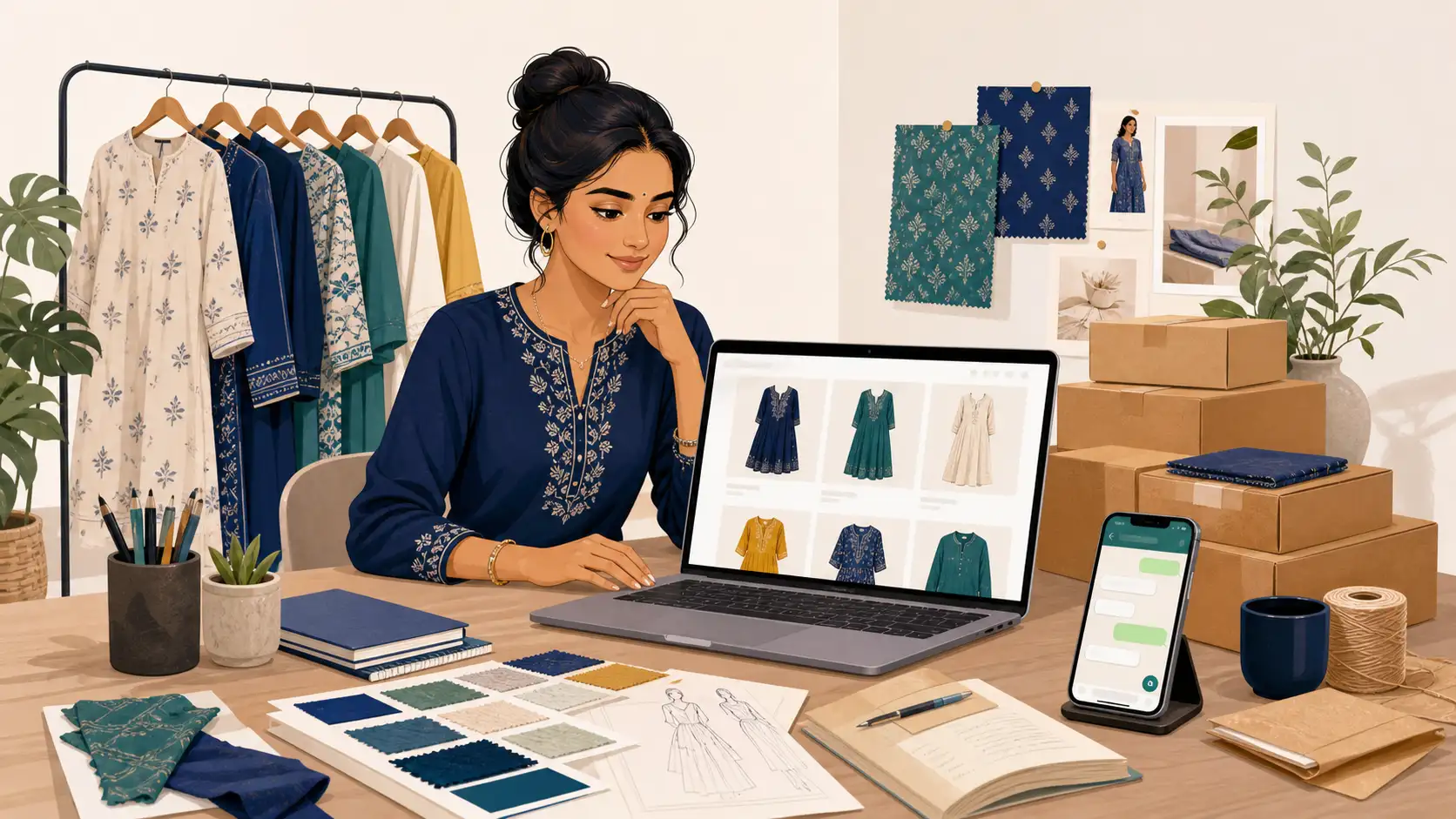
To start a clothing brand online in India, you need eight things in order: a clear niche, a validated product idea, a sourcing plan, business and GST registration, an online store, payment and shipping setup, content that sells, and a launch plan for your first customers. You do not need a physical shop or a large team. You do need a disciplined process and a platform that doesn't force you to stitch together a dozen separate tools.
This guide walks through each step with Indian realities in mind: UPI payments, cash on delivery (COD), GST rates on garments, and WhatsApp as a sales channel.
TL;DR: Key Takeaways
- Start narrow. A specific niche (for example, sustainable cotton kurtas or plus-size streetwear) is easier to market than "clothes for everyone".
- Validate before you stock up. Test with samples, pre-orders or a small first batch.
- Sort GST early. Clothing up to ₹2,500 per piece is taxed at 5%, above that at 18%, and selling to other states generally requires registration.
- Offer UPI and COD, and verify COD orders to protect your margins.
- Own your storefront. Marketplaces help with reach, but your own store builds a customer base you control.
The Roadmap to Start a Clothing Brand Online at a Glance
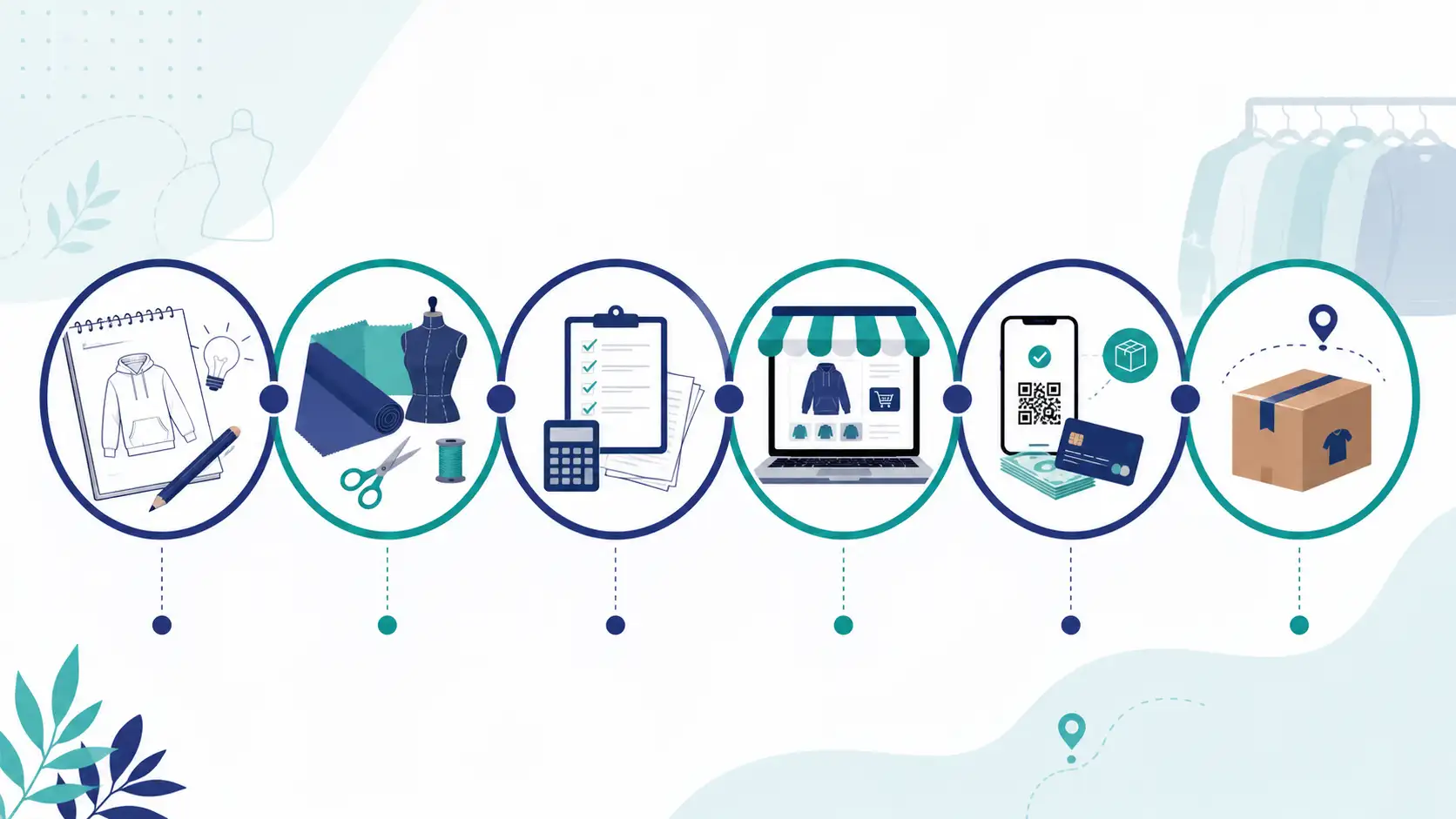
Most first-time founders lose months by doing these steps out of order, for example ordering 500 pieces before knowing who will buy them. Follow this sequence instead:
- Choose a niche and define your ideal customer.
- Validate demand and set a realistic budget.
- Source or make your first small batch.
- Register your business and set up GST.
- Build your online store with product pages, size guides and policies.
- Connect payments and shipping, including UPI and COD.
- Create content and launch on Instagram, WhatsApp and email.
- Measure, repeat and grow with customer data.
Choose Your Clothing Niche
India's apparel market is crowded at the generic end and surprisingly open at the specific end. A niche gives people a reason to remember you and gives you a clear audience for your marketing.
Ways to find a niche
- Solve a fit or comfort problem: petite sizing, plus-size ethnic wear, work-from-home loungewear, breathable cotton for humid cities.
- Bring a craft or fabric story: handloom, block print, khadi or regional weaves, with a verifiable story about how they're made.
- Serve a community or moment: festive wear, college merchandise, maternity, kidswear or sustainable basics.
Define your customer
Write one paragraph describing your ideal buyer: age, city tier, price comfort, where they discover fashion (Instagram Reels, WhatsApp groups, friends) and what stops them from buying online (fit worries, return hassle, COD preference). Every later decision on pricing, photography and payment options gets easier once this is clear.
Validate Your Idea and Plan Your Budget
Validation means collecting evidence that real people will pay for your product before you commit to a big batch.
- Show samples or mock-ups to 20 to 30 people from your target audience and ask what they'd pay.
- Run a pre-order or waitlist for your first design drop.
- Study competitors: look at price points, size ranges, reviews and the complaints customers repeat.
- Calculate unit economics: cost per piece + packaging + shipping + payment fees + expected returns + marketing. Price only after you know this number.
Budget tip: Keep your first batch small. Plan money for samples, photography, platform subscription, shipping materials and your first marketing tests, not just inventory. Costs vary widely by fabric, quantity and city, so get actual quotes instead of relying on generic figures.
Source or Manufacture Your Clothing
You don't need your own factory. Most new Indian clothing brands begin with one of these models:
| Model | How it works | Best for | Watch out for |
|---|---|---|---|
| Private label / white label | A manufacturer makes designs you choose and you add your label | Quick launch of basics | Less differentiation; check quality on samples |
| Custom manufacturing | You provide design and tech pack; a tailor or factory produces it | Unique designs and fit | Minimum order quantities and longer timelines |
| Print on demand | Designs are printed only when an order arrives | Graphic tees, merchandise | Lower margins; limited fabric and fit choices |
| Wholesale / reselling | You buy ready stock from suppliers and sell under your brand or curated store | Curated collections | Others may sell the same items |
Questions to ask every supplier
- What is the minimum order quantity per style and size?
- Can I get a paid sample before bulk production?
- What is the production and restocking lead time?
- How do you handle defects and size inconsistencies?
- Can you provide GST invoices for your supplies?
Register Your Business and Handle GST
Choose a business structure (sole proprietorship, partnership, LLP or private limited company) with a chartered accountant. You can also consider Udyam registration for MSME recognition. Then open a current bank account in your business name.
Do you need GST registration to sell clothes online?
Usually, yes, or sooner than you expect. According to the GST Council's e-commerce FAQ, people supplying goods through an e-commerce operator that collects tax at source are not eligible for the threshold exemption and must register. Inter-state supply of goods also generally requires registration regardless of turnover.
| How you sell | GST registration |
|---|---|
| On marketplaces (Amazon, Flipkart, Myntra and similar) | Generally required from the first sale |
| On your own website to customers in other states | Required (inter-state supply of goods) |
| On your own website within one state only | Required once turnover crosses ₹40 lakh (₹20 lakh in special category states) |
What is the GST rate on clothing?
Since 22 September 2025, eligible garments under HSN chapters 61 and 62 are taxed at 5% when the sale value is up to ₹2,500 per piece and 18% above ₹2,500 per piece, based on the transaction value before GST. Details are summarised by MSMETOOLS. Because one order can contain items at two different rates, your store and invoices should handle product-level tax rates.
This is general information, not tax advice. Rates depend on HSN classification, so confirm your specific products and registration needs with a chartered accountant.
Build Your Online Clothing Store
Your store is your brand's home. Marketplaces can bring early visibility, but on your own store you control the design, pricing, customer data and repeat-purchase experience.
What a clothing store needs
Product pages that reduce doubt
Multiple angles, close-ups of fabric, model height and size worn, a clear size chart, and honest care instructions.
Mobile-first browsing
Most fashion shoppers in India browse on their phones, so fast pages and easy checkout matter more than fancy effects.
Clear policies
Shipping timelines, returns and exchanges, and COD terms, visible before checkout.
Collections that guide
Organise by occasion, category or fabric so shoppers find what they need quickly.
Choosing a platform
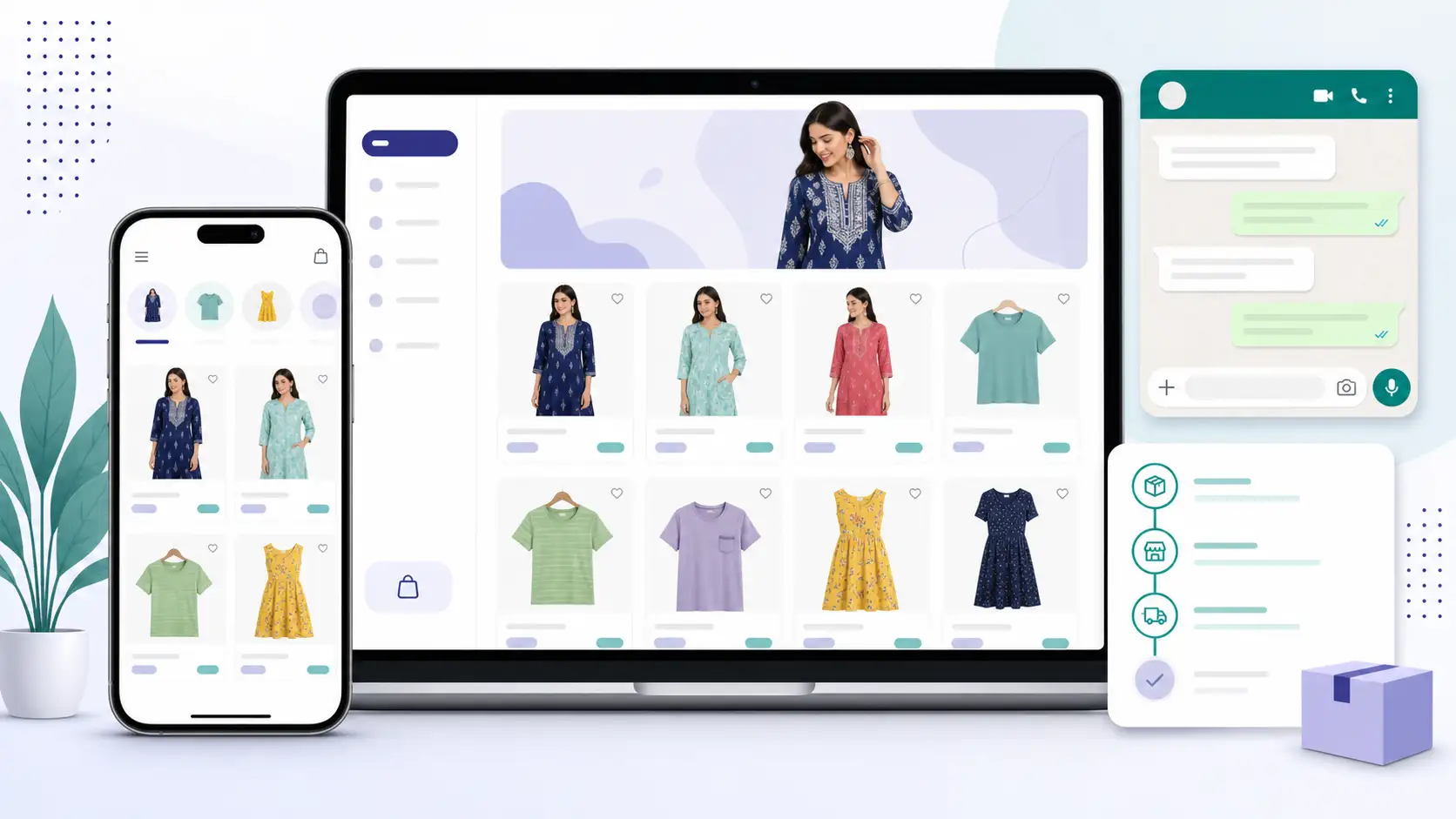
Many Indian merchants start with a store builder and then add paid apps for WhatsApp messaging, COD verification, helpdesk, email and invoicing. Those costs and integrations add up. GoHato, a US-based commerce technology company, takes a different approach: it brings the storefront, product and order management, WhatsApp CRM (via Meta's official Cloud API), email marketing, helpdesk, inventory, GST invoicing and AI tools into one platform. For fashion brands it includes sizing guides and storefront layouts that can be customised at store, category and subcategory levels.
If you're weighing options, read this breakdown of how GoHato compares with a typical Shopify app stack before you decide. GoHato's special India-market offer is ₹1,000 per month (standard international pricing is US$19 per month). Always confirm current details on the pricing page.
Set Up Payments, COD and Shipping
Payments
Indian shoppers expect UPI, cards and net banking. Payment gateways typically ask for business documents and bank details, and may request a GSTIN during onboarding. GoHato supports payment gateway integrations, including UPI-based payments, and offers onboarding assistance for gateway setup and KYC.
Cash on delivery
COD removes trust barriers for first-time buyers, but it can raise return-to-origin (RTO) costs. Reduce them by confirming orders before dispatch, for example with a WhatsApp or OTP-based verification step. GoHato includes COD verification workflows through its WhatsApp CRM.
Shipping and returns
- Compare courier partners on pincode coverage, delivery speed, COD remittance timelines and RTO charges.
- Use sturdy, brand-consistent packaging; fashion is an unboxing-led category.
- Write a return and exchange policy you can actually honour, and make size exchanges easy.
- Share order updates automatically so customers don't need to ask "where is my order?".
Market Your Clothing Brand
A great product still needs attention. Focus on a few channels and do them well.
Content and Instagram
Short videos showing fit, fabric movement and styling help shoppers judge a garment they can't touch.
Use it for order updates, abandoned cart reminders and customer questions, with proper customer consent.
Welcome sequences, new-drop announcements and restock alerts bring buyers back at low cost.
Your launch checklist
- Take clean product photos on a consistent background; enhance and edit them before upload.
- Write product descriptions with fabric, fit, size and care details.
- Place test orders to check checkout, payment, invoice and tracking.
- Announce to your waitlist first, then widen to ads or collaborations.
- Review sales and customer data weekly, then double down on what sells.
GoHato's AI tools can help with product content, image enhancement and promotional banners, and its business analytics show which products and customers drive your sales. Treat them as time-savers, not replacements for your own brand voice.
Conclusion
Starting a clothing brand online in India is less about a big budget and more about order and focus: choose a specific niche, validate it, source a small first batch, register for GST correctly, and launch on a store that handles UPI, COD, shipping and customer communication without a patchwork of tools. Then learn from your first orders and improve every drop.
Frequently Asked Questions
Can I start a clothing brand online in India with a small budget?
Yes. You can begin with a small private-label batch or print on demand. You still need money for samples, photography, a store platform, packaging and early marketing, so plan these costs before ordering inventory.
Do I need GST registration to sell clothes online in India?
Generally yes if you sell through marketplaces or ship goods to customers in other states. If you sell only within your own state through your own website, registration is required once turnover crosses ₹40 lakh (₹20 lakh in special category states). Confirm with a chartered accountant.
What is the GST rate on clothes?
From 22 September 2025, eligible garments are taxed at 5% when the sale value is up to ₹2,500 per piece and 18% above that. The exact rate depends on HSN classification and the transaction value before GST.
Should I sell on marketplaces or on my own website?
Many brands do both. Marketplaces offer reach, while your own website lets you keep customer relationships, data and branding. Starting with your own store and adding marketplaces later is a common approach.
How much does GoHato cost for an Indian clothing brand?
GoHato has a special India-market discounted offer of ₹1,000 per month. Its standard international pricing is US$19 per month. Check the official pricing page for current details.
How can I reduce COD returns on my clothing store?
Verify COD orders before dispatch using WhatsApp or OTP confirmation, show accurate size charts and fabric details, and use clear photos. These steps reduce wrong-size orders and refusals at delivery.
Ready to Launch Your Clothing Brand?
Build your storefront, connect payments and talk to customers on WhatsApp from one platform. Go. Build. Disrupt.