How to Start a Consignment Store: The Complete Omnichannel Blueprint
Turn pre-loved designer collections, vintage treasures, and curated lifestyle goods into a profitable retail business with zero upfront inventory cost.

The global resale and circular fashion economy is expanding at three times the speed of conventional retail. Consumer preferences have decisively shifted toward sustainable luxury, vintage individuality, and value-conscious shopping. Yet, the traditional retail hurdle—spending tens of thousands of dollars purchasing wholesale inventory before ever welcoming a paying customer—stops countless aspiring boutique owners in their tracks.
This is precisely why learning how to start a consignment store is one of the most resilient, capital-efficient commerce ventures available today. In a consignment model, independent owners, fashion collectors, and local residents supply your store with inventory. You only pay for the goods after they sell, retaining a healthy 40% to 60% commission split on every transaction.
Whether you are exploring how to start a consignment shop in a bustling downtown district, planning how to open a consignment store online, or curious about hybrid retail formats that blend designer apparel with complementary categories like a boutique makeup business, this detailed operational manual guides you through every step from legal setup and split formulas to digital inventory management.
- Zero Capital Inventory: Consignors provide your stock on trust. Your startup capital goes directly into branding, interior buildout, and reliable omnichannel point-of-sale software.
- Standard Split Tiers: Traditional brick-and-mortar splits range between 50/50 and 60/40 (store/consignor). High-ticket luxury items often use sliding commission scales (e.g., 70/30 in favor of the consignor for goods over $1,000).
- Omnichannel Synchronization: Modern resale requires selling both on the physical sales floor and through an integrated digital storefront with live inventory sync to avoid double-selling.
- Diversified Retail Streams: Complement consignment fashion with high-margin outright-purchase items such as branded cosmetics, indie skincare lines, or jewelry to lift average order value (AOV).
1. Understanding the Consignment Business Model
Before diving into retail leases and store fixtures, clarity on the operational model is essential. Many entrepreneurs confuse consignment with traditional thrift stores or outright buy-sell-trade shops. Understanding the differences ensures you select the correct pricing structures, accounting policies, and cash flow expectations.
| Model Type | Inventory Ownership | Upfront Capital Required | Gross Margin Range | Primary Risk Factor |
|---|---|---|---|---|
| Consignment Store | Retained by consignor until sold | Very Low (fixtures & rent only) | 40% – 60% commission | Consignor trust & slow-moving stock |
| Buy-Sell-Trade (Pash/Trade) | Store owns inventory immediately | High (cash payouts upfront) | 60% – 75% markup | Purchasing dead stock that fails to sell |
| Donation Thrift | Store owns donated goods | Low to Moderate (processing heavy) | 85% – 95% margin | High sorting labor & low item quality |
In a consignment boutique, you enter into a legal bailment relationship with your consignor. The consignor delivers the item, you display and market it, and when the customer purchases the piece, your point-of-sale registers the transaction, splits the revenue, and creates an automated payout liability to the consignor.
Because you don't spend capital acquiring products, your financial runway is protected. If an item doesn't sell within your contractual cycle (typically 60 to 90 days), the consignor either reclaims the piece or authorizes you to discount or donate it. This turns starting a consignment shop into one of retail's most agile business formats.
2. Choosing Your Profitable Resale Niche
A common mistake made when learning how to open a consignment store is attempting to be everything to everyone. Generalist resale shops that mix vintage vinyl, contemporary children's clothing, mid-century furniture, and budget fashion often struggle with customer identity and visual cohesion.
Instead, high-performing consignment stores curate tightly defined aesthetics that appeal to a specific demographic. Here are the most lucrative niches in modern circular commerce:
Luxury & Designer Apparel
Curates authenticated handbags, footwear, and garments from established luxury houses (Chanel, Gucci, Prada) and contemporary cult labels. High ticket values offset lower volume, delivering strong absolute revenue per transaction.
Archival & Vintage Streetwear
Focuses on 90s heritage denim, band tees, military outerwear, and collectible sneakers. Driven by Gen Z and millennial enthusiasts seeking one-of-a-kind wardrobe staples that express individuality.
Children's & Maternity Essentials
Capitalizes on rapid developmental turnover. Parents urgently need quality gear, designer strollers, and gently worn clothing that children outgrow in months, generating frequent, recurring shopping trips.
Hybrid Lifestyle & Beauty Concepts
Merges high-end pre-loved apparel with complementary new merchandise. Operators often stock niche accessories alongside an independent makeup business or clean skincare display, generating instant, high-margin retail impulse buys.
If your ambition extends toward producing your own original clothing line while leveraging consignment foot traffic, review our detailed guide on starting a clothing brand online to explore how private label inventory pairs with circular resale.
3. Legal Setup, Licensing, and Consignor Agreements
Operating a consignment store involves handling other people's valuable personal property. A rock-solid legal and contractual foundation is non-negotiable to protect your business against loss, theft, damage, and customer disputes.
Forming the Business Entity
Register your enterprise as a Limited Liability Company (LLC) or regional corporate equivalent. This shields your personal assets from commercial liabilities. Obtain a federal Employer Identification Number (EIN) or local tax registration, secure your local retail merchant certificate, and register for sales tax collection (or GST if operating in India).
Essential Clauses in Your Consignment Agreement
Every consignor must sign a formal consignment agreement before you accept their property. A legally sound contract contains:
- Consignment Period: Specify the exact duration (typically 60 or 90 days) during which the item will be showcased.
- Commission Split: Clear percentage allocation between store and consignor, including any deductions for authentication fees or credit card processing charges.
- Pricing Authority & Markdown Schedule: The store must maintain final discretion over initial pricing and automatic discount intervals (e.g., 20% off after 30 days, 50% off after 60 days).
- Loss & Damage Policy: State clearly whether the store carries bailee insurance covering theft, fire, or accidental damage, or whether goods are held at the consignor's sole risk.
- Unclaimed Property Clause: Mandate that items not retrieved within 7–14 days following the expiration of the consignment term become store property or are donated to an accredited charity.
4. Structuring Commission Splits and Pricing Tiers
Your commission split structure directly determines your store's profitability and ability to attract premium consignors. While 50/50 was once the universal standard, modern boutiques use dynamic, tiered commission structures tailored to product categories and market resale values.
| Item Resale Value Tier | Store Split | Consignor Split | Typical Product Categories |
|---|---|---|---|
| Under $50 (Budget / Contemporary) | 60% | 40% | High-street apparel, everyday accessories, kids wear |
| $50 – $299 (Mid-Tier Designer) | 50% | 50% | Denim, leather jackets, contemporary designer dresses |
| $300 – $999 (High-End Luxury) | 40% | 60% | Fine footwear, luxury sunglasses, designer outerwear |
| $1,000+ (Ultra-Luxury & Fine Jewelry) | 25% – 30% | 70% – 75% | Hermès, Chanel, Rolex, fine gold & diamond jewelry |
Implementing an Automated Markdown Cadence
Stale inventory destroys the perception of an upscale boutique. Customers need to know that every visit offers fresh discoveries. Use an automated markdown schedule that gradually incentivizes buyers while still offering fair returns to consignors:
- Days 1 – 30: Full initial ticket price. Premium placement on main display tables and featured social media showcases.
- Days 31 – 60: 20% discount. Items shift to secondary rack sections or digital sale collections.
- Days 61 – 90: 50% clearance discount. Final markdown push.
- Day 91+: Consignor pickup window opens. Any item not retrieved within 10 days is liquidated or donated.
5. Designing an Engaging Physical Storefront
Customers judge a consignment boutique within three seconds of crossing the threshold. If your space smells musty, features overcrowded wire hangers, or lacks clear zoning, shoppers subconsciously assign a lower value to your garments.
Prime Commercial Foot Traffic
Select a retail location nestled near complementary businesses—such as artisan coffee shops, independent bakeries, upscale salons, or yoga studios. Consignment shoppers enjoy leisurely browsing and frequently visit neighboring lifestyle spaces.
Airy, Curated Visual Merchandising
Use sturdy wooden or brushed brass hangers facing the same direction. Space garments at least one inch apart on rails so shoppers can inspect textures effortlessly. Organize racks by category, silhouette, and curated color palettes rather than dense size blocks.
Cross-Merchandised Impulse Counters
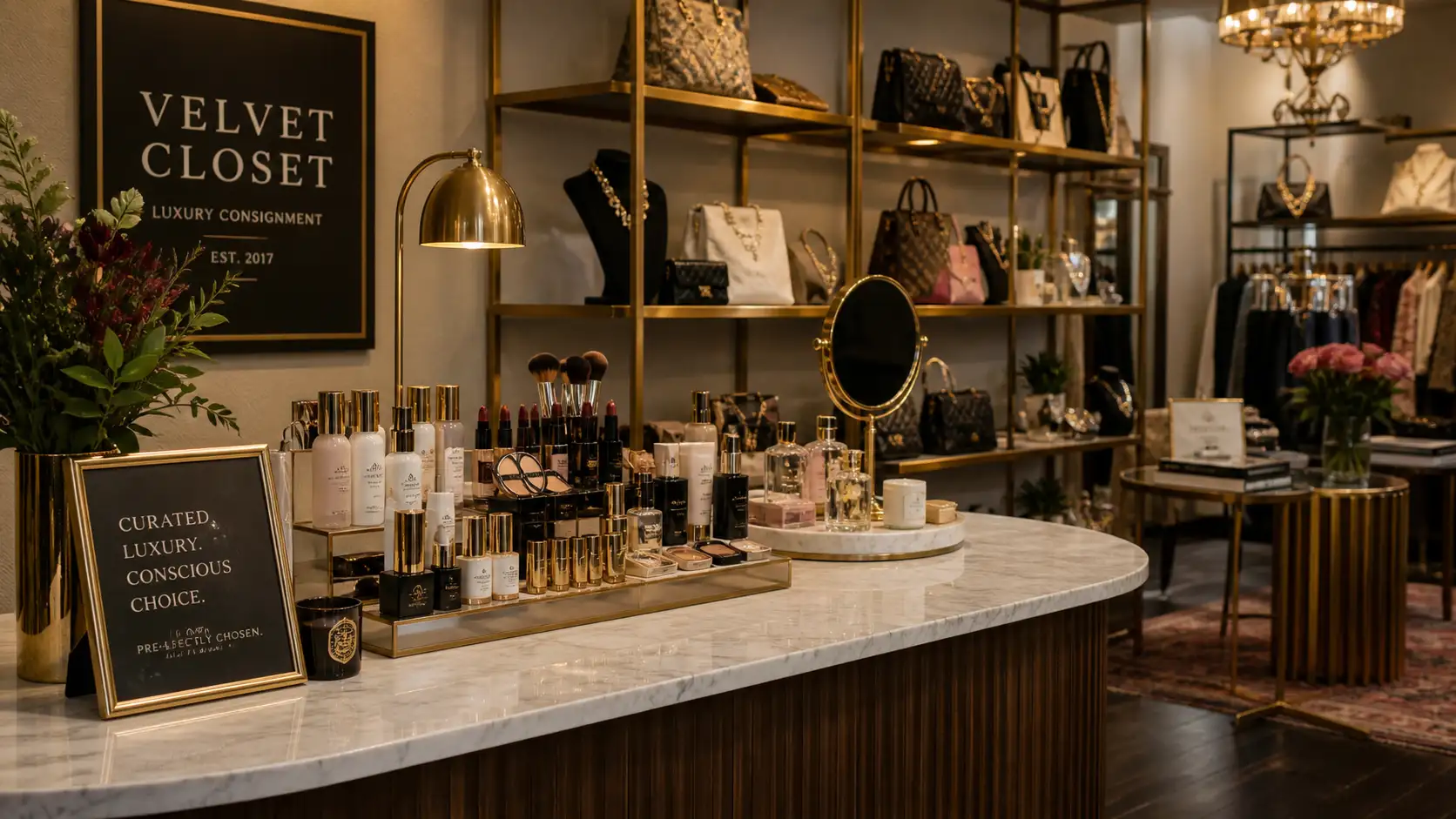
Design a dedicated marble or timber checkout counter featuring impulse add-ons. Many thriving boutique owners integrate a specialized makeup business display featuring vegan lipsticks, organic setting sprays, or artisanal fragrances. Because beauty items cannot be consigned pre-used, selling brand-new indie cosmetics provides 100% margin retention while completing the customer's total look.
Spacious, Flattering Fitting Rooms
Fitting rooms are where purchase decisions happen. Invest in warm, diffused 3000K LED lighting, full-length distortion-free mirrors, velvet seating, and brass hooks labeled "Definitely" and "Maybe". A luxurious fitting room experience cuts return rates and boosts conversion.
6. Building Your Omnichannel Storefront
In 2026, running a physical consignment shop without a synchronized online storefront leaves more than half your potential revenue on the table. Dedicated collectors and circular fashion buyers actively browse digital catalogs before visiting in person, while distant buyers are eager to snap up rare archival pieces online.
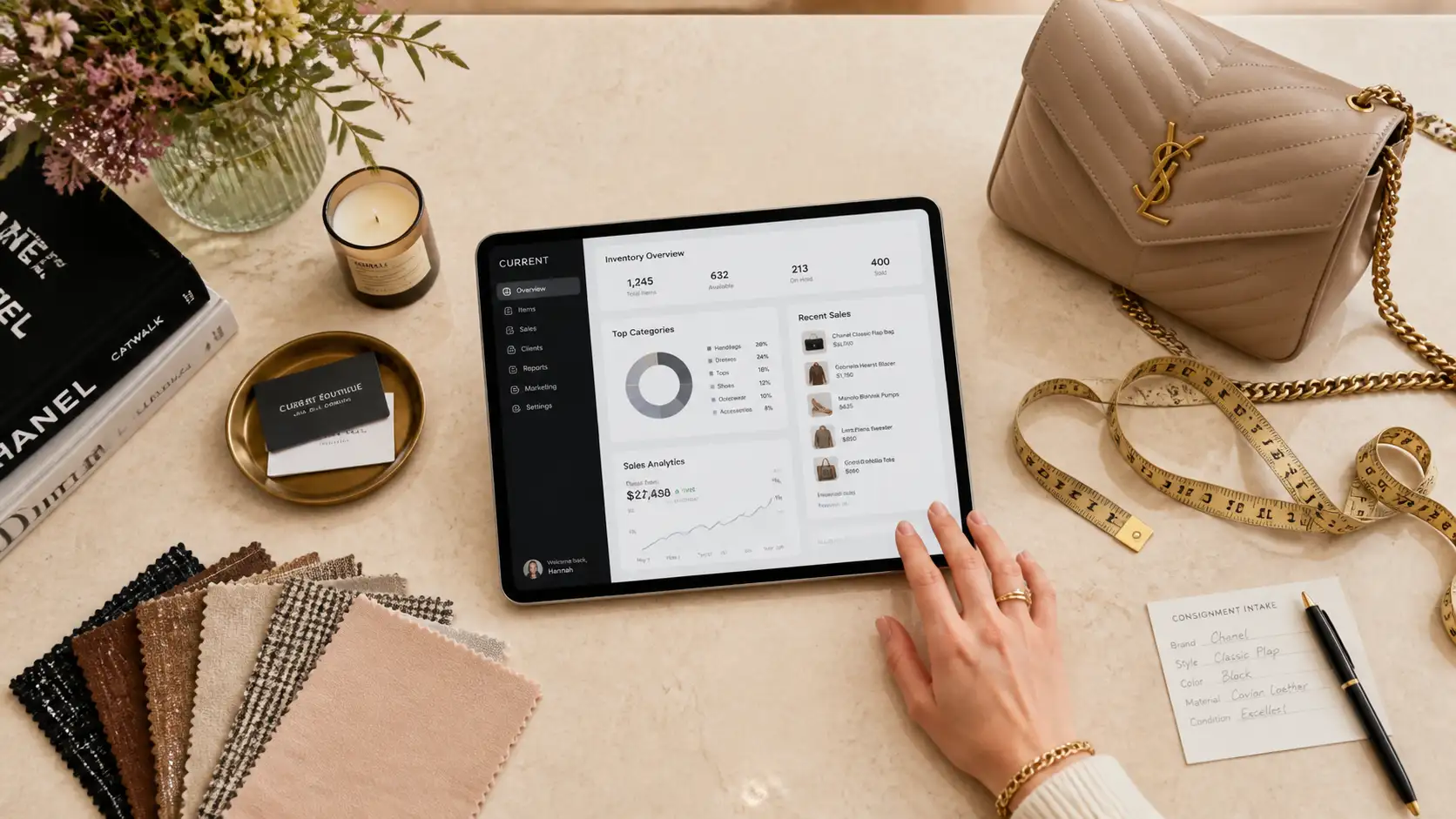
However, consignment ecommerce presents a unique technical hurdle: every single item in your store is a one-of-one SKU. If a customer in your downtown boutique picks up a vintage Yves Saint Laurent blazer at 2:15 PM, and an online shopper purchases that same item at 2:16 PM, you face an embarrassing stockout cancellation.
To prevent this, your retail infrastructure must utilize unified inventory management where in-store point-of-sale barcodes and online product listings update simultaneously in real time.
7. Daily Intake, Authentication, and Inventory Tagging
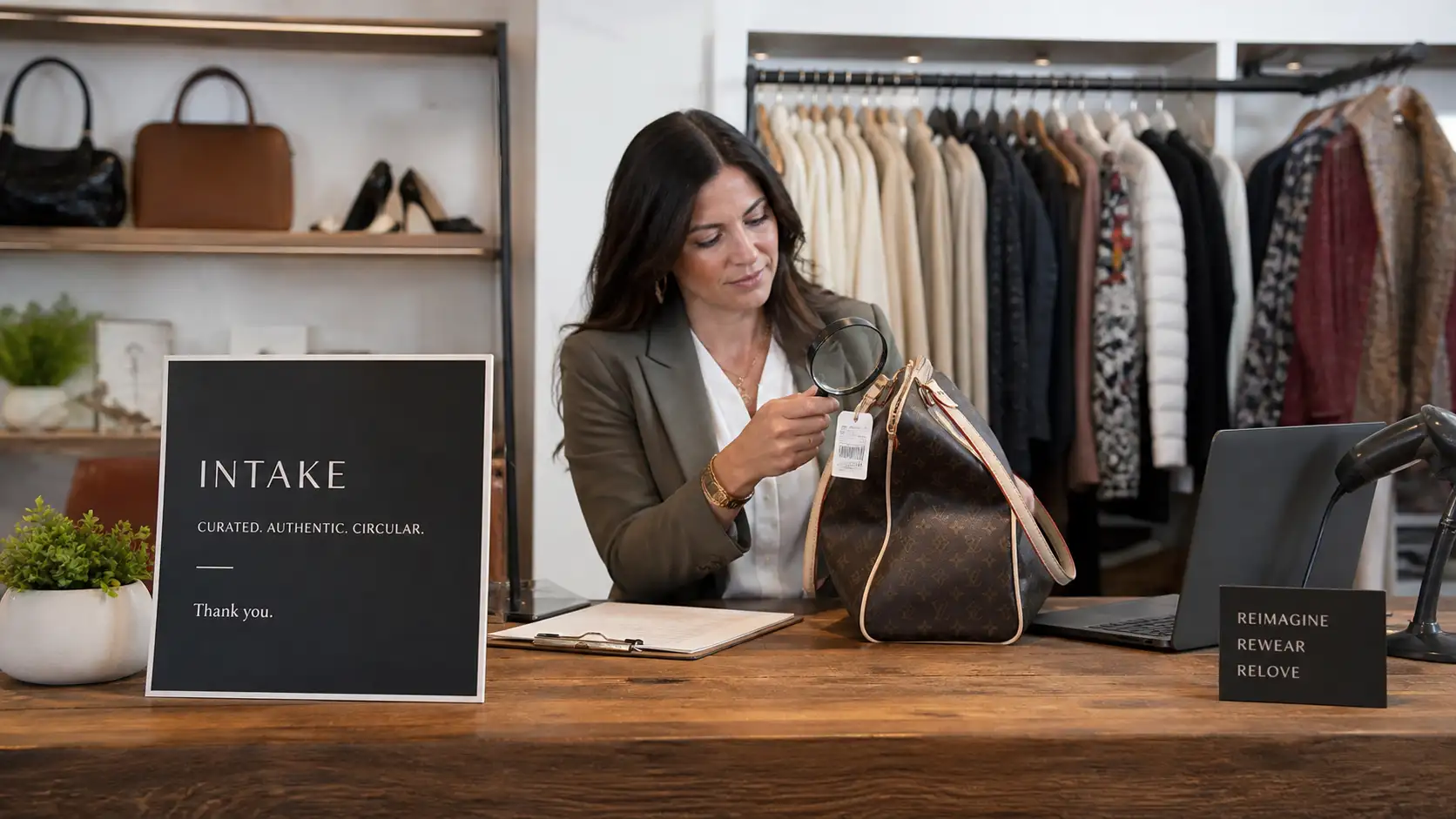
Operational excellence in consignment retail is won or lost at the intake counter. Establishing a structured, repeatable intake procedure prevents backlogs, ensures accurate appraisals, and eliminates counterfeit goods.
By-Appointment vs. Walk-In Intake Days
Never allow unvetted walk-in drop-offs during peak retail shopping hours. When sales staff are overwhelmed juggling customer checkout and assessing bags of garments, errors spike. Instead:
- Dedicate specific intake windows (e.g., Tuesdays and Thursdays from 10:00 AM to 2:00 PM).
- Require consignors to book appointments through your website.
- Set an item cap (e.g., maximum 15 items per appointment) to keep appraisal times under 20 minutes.
- Enforce condition guidelines: freshly dry-cleaned or laundered, pressed on hangers, no pet hair, no missing hardware or interior staining.
Verification and Authentication Standards
Selling a counterfeit designer bag—even unintentionally—can destroy a boutique's reputation and result in severe legal penalties. For luxury accessories, utilize AI-driven optical verification services such as Entrupy alongside certified master authenticators. Build the cost of authentication (typically $15 to $30) directly into the consignor contract as an intake deduction or upfront processing fee.
Smart Barcode Labeling
Every consigned SKU must receive a unique barcode label attached with a tagging gun or jewelry hangtag. The label must communicate vital data at a glance:
- Unique item identifier and SKU number
- Consignor account number (anonymized for privacy)
- Drop-off date (to track markdown timelines)
- Category, brand, and size
- Selling price and scheduled discount thresholds

8. Consignor Payouts, Community Marketing, and Retention
Your consignors are your most critical partners. In fact, satisfied consignors frequently spend their earnings right inside your shop, effectively functioning as your highest-spending VIP shoppers.
Transparent Payout Schedules and Store Credit Incentives
Establish predictable payout cycles—such as direct bank transfers or checks issued on the 10th of every month for the prior month's completed sales.
The Store Credit Multiplier: Offer consignors a 10% to 15% bonus if they opt to receive their payout in store credit rather than cash or bank wire. For example, if a consignor earns $200, offer them $230 in store credit. A substantial percentage of consignors will accept, boosting customer retention and locking those dollars directly into your retail ecosystem.
Community-Led Growth & Social Merchandising
Consignment thrives on discovery. Leverage community-driven marketing tactics:
- "Just In" Drops: Create weekly scheduled product drops on your digital storefront and notify shoppers via direct channels.
- Consignor Spotlight Evenings: Host after-hours styling sessions where local collectors showcase their curated pieces alongside refreshments.
- Styling Bundles: Combine pre-owned luxury garments with items from your in-store makeup business or jewelry collection to demonstrate complete outfit inspiration on video.
9. Scaling Your Consignment Business with GoHato
Most entrepreneurs embarking on how to start a consignment store quickly find themselves drowning in operational complexity. On standard ecommerce platforms like Shopify, running a modern resale store requires stitching together five to seven separate subscription apps: one for consignor portal logins, another for barcode label printing, a third for WhatsApp notifications, plus separate tools for email marketing, abandoned cart recovery, and tax invoicing.
This software bloat inflates monthly overhead and introduces synchronization glitches that result in accidental double-sales of one-of-a-kind inventory.
GoHato solves this fragmentation. As a US-based commerce technology company, GoHato provides an all-in-one AI-powered commerce and store management platform designed specifically for modern independent retailers and direct-to-consumer brands worldwide.
Integrated WhatsApp CRM
Powered by the official Meta Cloud API, GoHato automatically sends automated WhatsApp alerts to consignors when their items sell, shares weekly inventory status updates, and handles order confirmations, COD verification, and abandoned cart recovery directly on the world's most popular messaging channel.
Unified Omnichannel Inventory
Synchronize single-piece resale items, size variants, and outright-purchased lifestyle goods across digital storefronts and physical sales floors effortlessly, eliminating inventory discrepancies.
Built-In Invoicing & Tax Compliance
Generate professional, automated invoices with full regional tax compliance—including GST invoicing for Indian merchants and localized sales tax settings for international businesses.
Affordable Global Pricing
GoHato is priced at a transparent US$19 per month internationally, bundling storefront themes, CRM, marketing automation, helpdesk, and inventory control. For entrepreneurs launching in India, GoHato offers a special discounted local pricing of ₹1,000 per month.
For existing merchants looking to escape escalating app costs, GoHato offers full assisted catalog, customer, and domain migration with completion targeted within 48 hours. Explore our detailed GoHato vs Shopify comparison to see how an all-in-one platform reduces technical friction and preserves your profit margins.