How Can I Start a Makeup Line: The Complete 10-Step Guide to Launching a Cosmetics Brand
From raw pigment formulations and laboratory safety testing to primary packaging, unit economics, and building an automated direct-to-consumer digital storefront.
Quick Takeaways: How to Launch Your Own Makeup Line
- Formulation Path Dictates Capital: Private labeling allows you to launch with $3,000–$8,000 using pre-tested stock formulas, whereas custom contract manufacturing demands $25,000–$75,000+ for bespoke chemistry, stability testing, and high minimum order quantities (MOQs).
- Strict Global Compliance is Non-Negotiable: Whether operating under the FDA MoCRA framework in North America, Regulation (EC) No 1223/2009 in Europe, or CDSCO guidelines in India, mandatory testing (microbial, PET, stability) and precise INCI ingredient labeling are legal necessities.
- Gross Margins Average 75% to 85%: Healthy cosmetic unit economics require a 4x to 6x retail markup over Cost of Goods Sold (COGS) to account for influencer sample seeding, paid customer acquisition, and packaging expenses.
- Direct-to-Consumer Store Architecture Matters: Standalone digital storefronts with integrated catalog management, shade comparison finders, and direct messaging workflows (such as WhatsApp recovery and order notifications) outperform generic marketplace listings.
1. The Modern Beauty Landscape: Opportunity and Economics
If you are asking yourself, "how can I start a makeup line from scratch?", you are entering one of the most resilient, creative, and profitable sectors in consumer commerce. Valued at over $100 billion globally, the color cosmetics sector defies economic downturns through the well-documented "lipstick index"—consumers consistently invest in affordable luxury, self-expression, and daily wellness rituals even during broader market contractions.
Historically, legacy conglomerates controlled retail shelf space, department store distribution, and chemical production labs. However, modern direct-to-consumer (D2C) commerce has completely upended this hierarchy. Independent beauty brands (indie beauty) now capture market share at an unprecedented rate. Digital-first consumers discover products through TikTok video swatches, Instagram micro-influencers, and community tutorials rather than glossy print advertisements.
Yet, building a thriving makeup business requires far more than aesthetic Instagram mockups and charismatic marketing. Cosmetic products physically touch human skin, mucus membranes, and eyes. They must survive thermal stress in transit, comply with stringent international safety legislation, maintain preservative efficacy over years, and deliver flawless pigment dispersion. Understanding the balance between creative brand expression and rigorous biochemical logistics is the primary differentiator between brands that fold after their first batch and brands that scale to multi-million-dollar valuations.
2. Defining Your Niche & Unique Value Proposition
When prospective entrepreneurs research how do you start a makeup line, their most frequent early mistake is attempting to launch a comprehensive 40-SKU catalog spanning primers, foundations, concealers, liquid lipsticks, and pressed eyeshadow palettes all at once. Competing across every cosmetic category on day one fragments your launch capital, dilutes your marketing message, and generates inventory bloat.
Instead, modern cosmetic success stories begin with a distinct "Hero Product"—a single, hyper-differentiated offering that solves an unmistakable consumer pain point. Consider how Rare Beauty championed breathable weightless liquid blush, how Fenty Beauty disrupted the market with a groundbreaking 40-shade inclusivity standard, or how Glossier built an empire around dewy, minimalist skin finishes.
Clean & Hybrid Cosmetics
Color cosmetics infused with functional skincare actives such as hyaluronic acid, niacinamide, and squalane. Consumers demand multi-benefit formulations that enhance complexion while treating barrier health.
Climate-Adaptive Pigments
Formulations engineered specifically for hyper-pigmented, olive, or deep undertones, or humidity-resistant makeup designed for humid Asian and Latin American climates that prevent melting and oxidation.
Multi-Use Pocket Formats
Compact, twist-up multipurpose cream sticks serving lips, cheeks, and eyelids simultaneously. Appeals to busy professionals, minimalists, and zero-waste travelers seeking sustainable simplicity.
100% Vegan & Halal Certified
Formulations formulated strictly without animal derivatives (such as carmine or lanolin), carrying cruelty-free certification and verifiable ethical supply chain credentials.
Before commissioning a single laboratory sample, identify your Target Consumer Persona: What is their climate? What skin sensitivities do they navigate? Are they buying for quick 5-minute morning routines or full-coverage evening glamour? Your answers directly govern your formulation specifications, texture viscosity, packaging aesthetics, and retail price ceiling.
3. Crafting a Solid Business Plan for Makeup
A comprehensive business plan for makeup is your blueprint for capital allocation, margin preservation, and regulatory compliance. Without a granular financial framework, beauty founders frequently deplete their funds on secondary packaging and custom molds before reserving capital for mandatory laboratory microbial challenges or digital customer acquisition.
The Cosmetic Margin Rule: 4x to 6x Retail Markup
In standard consumer packaged goods, a 2.5x markup over Cost of Goods Sold (COGS) might suffice. In color cosmetics, you must target a minimum of 4x to 5x for direct-to-consumer channels, and ideally 5x to 6x if you ever intend to distribute through retail partners (such as Sephora, Ulta, or regional department stores), where wholesale buyers expect a 50% discount off your recommended retail price (RRP).
| Cost Component | Typical Cost per Unit | Percentage of Target Retail Price | Strategic Purpose |
|---|---|---|---|
| Bulk Formulation (Liquid/Cream/Powder) | $1.20 – $2.80 | 6% – 12% | Raw cosmetic base, active botanicals, cosmetic pigments, stabilizers. |
| Primary Packaging (Bottle, Wand, Compact) | $0.80 – $2.20 | 4% – 10% | Aesthetic glass, airless pumps, custom caps, inner wiper mechanisms. |
| Secondary Packaging (Outer Box / Carton) | $0.35 – $0.90 | 2% – 4% | FSC-certified paperboard, embossed foil branding, mandatory INCI declarations. |
| Filling, Assembly & Shrink Wrapping | $0.45 – $1.10 | 2% – 5% | Sterile batch pouring, wand insertion, batch coding, safety tamper seals. |
| Inbound Freight & Warehousing | $0.30 – $0.70 | 1% – 3% | Container pallet transport, customs clearance, climate-controlled storage. |
| Total Unit COGS | $3.10 – $7.70 | 15% – 25% | Healthy target: Maximum 20% to 25% of final retail price. |
| Target Retail Price (RRP) | $22.00 – $32.00 | 100% | Leaves 75%–80% gross margin for acquisition, influencer seeding, and profit. |
Similar to building apparel ventures—where fabric sourcing, pattern sizing, and supplier runs must be tightly modeled (as detailed in our guide on launching an apparel brand)—a cosmetics venture requires meticulous supplier lead-time forecasting and clear cash flow cushions before committing to inventory runs.
4. Formulation Pathways: Private Label vs. Contract Manufacturing
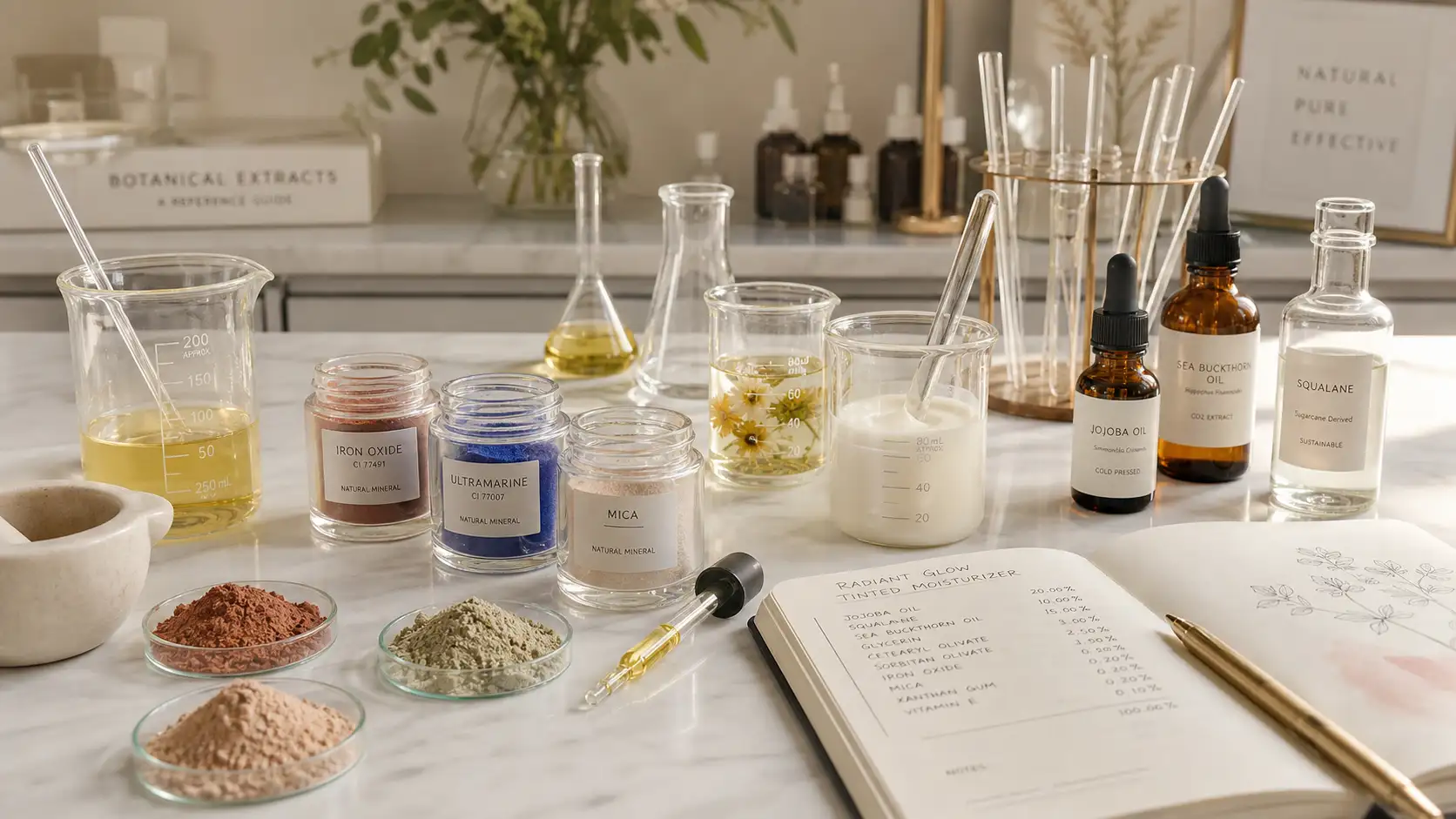
When asking how can i start my own cosmetic line, your manufacturing pathway is the most critical operational decision you will make. Founders generally choose between four distinct routes, each presenting specific trade-offs regarding capital requirements, intellectual property ownership, and speed to market.
1. White Labeling
A manufacturer produces generic, finished cosmetic formulas already packaged in stock containers. You simply slap your branded adhesive label onto the exterior. Best for: Creators or aesthetic salons testing initial audience interest with under $2,000. Drawback: Zero formulation exclusivity; identical products can be purchased from competitors under different brand names.
2. Private Labeling
You select from a verified library of pre-formulated, stability-tested bases (e.g., a matte liquid foundation base or a hydrating lip oil) and customize specific parameters such as pigment concentrations, aromatic extracts, or custom primary packaging. Best for: Early-stage founders seeking professional quality, rapid 60-day launch cycles, and lower Minimum Order Quantities (MOQs of 250 to 1,000 units per shade).
3. Custom Contract Formulation (Bespoke OEM/ODM)
You collaborate directly with a cosmetic research chemist or a contract development and manufacturing organization (CDMO). You create an exclusive formulation from the ground up, specifying exact percentages of botanical oils, emulsifiers, film-formers, and active ingredients. Best for: Well-funded startups with $30,000+ budget, creating patented textures, or meeting stringent proprietary clean-beauty standards.
Warning on "Kitchen Chemistry"
While formulating lip gloss or mineral powder in your personal kitchen may seem like an economical way to bootstrap, selling cosmetics prepared in uncertified, non-GMP domestic environments introduces severe microbial contamination risks. Staphylococcal, fungal, and pseudomonal bacterial blooms can rapidly form in water-containing emulsions lacking laboratory-calibrated broad-spectrum preservative systems. Always partner with ISO 22716 / Good Manufacturing Practice (GMP) certified laboratory facilities.
| Manufacturing Model | Typical Startup Capital | Lead Time to Launch | Minimum Order Quantity (MOQ) | IP Ownership |
|---|---|---|---|---|
| White Label | $1,500 – $4,000 | 30 – 45 days | 50 – 250 units | None (Owned by lab) |
| Private Label | $4,000 – $12,000 | 60 – 90 days | 250 – 1,000 units | Restricted to brand packaging |
| Bespoke Contract Lab (OEM) | $25,000 – $75,000+ | 6 – 12 months | 2,500 – 10,000 units | Full proprietary formula ownership |
5. Regulatory Compliance, Safety Testing & INCI Labeling
Cosmetics are legally classified as substances intended to be applied to the human body for cleansing, beautifying, or altering appearance without affecting body structure or function. If your marketing claims that your makeup "heals acne," "stimulates lash growth," or "reverses deep cellular aging," regulators in most jurisdictions will reclassify your product as a drug, triggering severe pharmaceutical compliance mandates.
Key Regulatory Frameworks by Region
- United States (FDA & MoCRA): Enacted under the Modernization of Cosmetics Regulation Act (MoCRA), cosmetic brands must complete facility registration, mandatory cosmetic product listing, substantiate ingredient safety, maintain adverse event record-keeping, and adhere to strict fragrance allergen disclosures.
- European Union & UK: Governed by Regulation (EC) No 1223/2009. Demands the appointment of an EU-based Responsible Person (RP), compilation of a comprehensive Product Information File (PIF), a formal Cosmetic Product Safety Report (CPSR) signed by a certified toxicologist, and electronic notification via the CPNP portal before any unit is sold.
- India (CDSCO & BIS): Governed by the Drugs and Cosmetics Act and Rules. Domestic manufacturers and imported cosmetics must obtain registration certificates or licenses from the Central Drugs Standard Control Organisation (CDSCO) and comply with Bureau of Indian Standards (BIS) specifications for colorants and raw raw materials.
Mandatory Laboratory Testing Protocols
Never retail a cosmetic batch without receiving signed Certificates of Analysis (CoA) from your laboratory covering these essential tests:
- Preservative Efficacy Testing (PET / Challenge Testing): The formulation is inoculated with high concentrations of pathogenic bacteria and fungi (such as Pseudomonas aeruginosa, Staphylococcus aureus, and Candida albicans) over 28 days to verify that the preservative system kills microbial contamination introduced by consumer fingertips or applicators.
- Accelerated Stability & Compatibility Testing: Finished formulations are stored in their final primary packaging at elevated temperatures (typically 40°C to 45°C and 75% relative humidity) for 12 weeks to simulate two to three years of real-world shelf life. Evaluates phase separation, discoloration, pH drift, and packaging degradation.
- Heavy Metal Screening: Assaying bulk pigment batches for toxic trace impurities, ensuring lead, arsenic, mercury, cadmium, and antimony remain strictly below statutory parts-per-million (ppm) thresholds.
On your outer packaging, ingredient listings must strictly follow the International Nomenclature of Cosmetic Ingredients (INCI) in descending order of predominance up to 1%, below which ingredients and colorants (CI numbers) may be listed in any order.
6. Sourcing Packaging & Visual Brand Identity
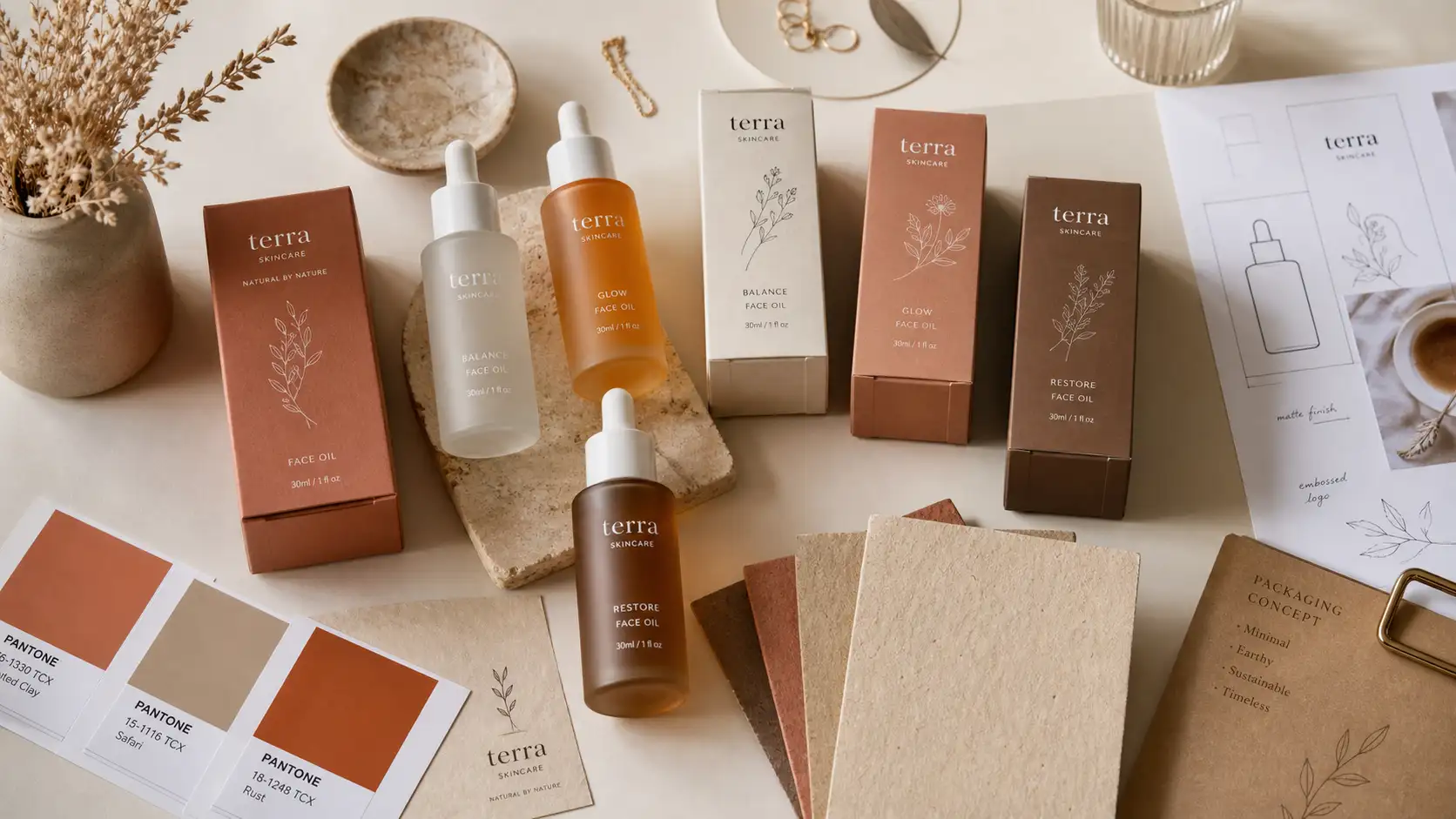
In the beauty industry, consumers touch, open, click, and display your packaging on their vanity tables every day. Packaging is not merely an outer container; it is an intrinsic part of the user experience and formula efficacy. Airless pumps prevent active botanicals from oxidizing, opaque frosted glass preserves UV-sensitive pigments, and weighted magnetic lipstick closures provide tactile psychological cues of luxury.
Primary vs. Secondary Packaging
Primary packaging touches the physical cosmetic bulk (tubes, jars, doe-foot wands, dropper pipettes, compact pans). Secondary packaging encompasses the exterior unit carton, protective inserts, and tamper-evident outer seal that communicates shelf presence and provides surface area for legal INCI disclosures, net weight volume, batch code stamping, and PAO (Period After Opening) symbols.
Custom Tooling vs. Stock Components
Designing a custom injection-molded component can require $10,000–$30,000 in upfront tooling molds and 10,000-unit minimums. Early-stage brands should utilize pre-existing stock packaging from reputable suppliers, customizing through silk-screen printing, hot foil stamping, soft-touch matte lacquers, or custom Pantone color matching.
Sustainable & Recyclable Materials
Modern consumers actively boycott non-recyclable multi-material plastics. Evaluate Post-Consumer Recycled (PCR) resins, infinitely recyclable aluminum compacts, bio-based sugarcane tubes, or refillable pan cartridges that allow loyal customers to replenish product without discarding primary shells.
7. Prototyping, Shade Development & Quality Control
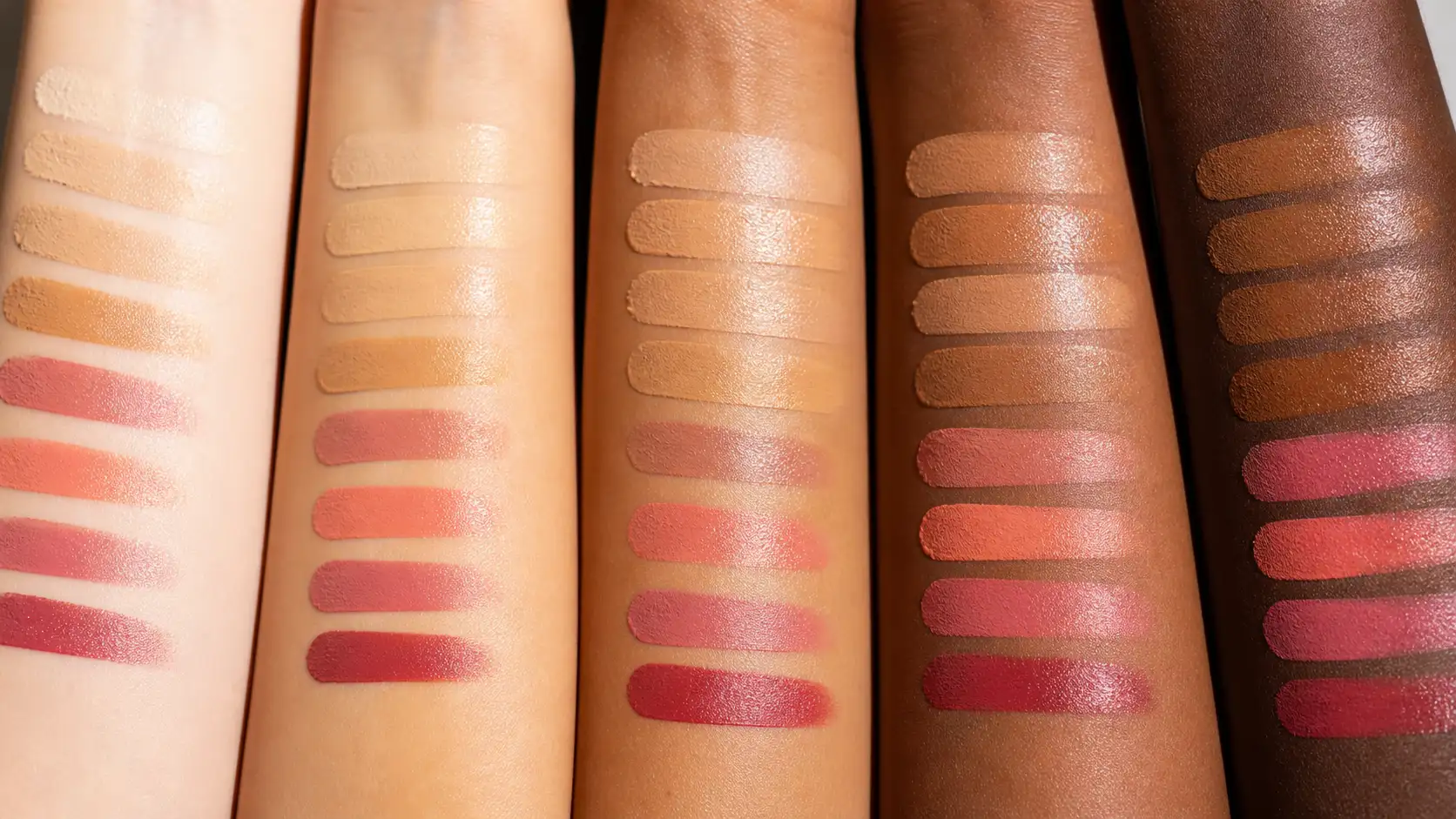
When you investigate how do you start a makeup brand, formulation sampling is where theory meets reality. A shade that appears stunning in a laboratory beaker can behave entirely differently when spread across different Fitzpatrick skin phototypes or subjected to office lighting vs. direct sunlight.
The Iterative Sampling Protocol
Request multiple sampling rounds from your manufacturer. When evaluating benchmark prototypes, stress-test these specific attributes:
- Color Payoff & Micronization: Are the mineral pigments (iron oxides, titanium dioxide, mica) milled finely enough to eliminate chalkiness and grain? Does a single swatch deliver consistent opacity?
- Oxidation Stability: Does the liquid foundation or concealer darken by two shades after 20 minutes of atmospheric exposure and interaction with skin sebum?
- Wear Time & Transfer Resistance: Does a cream blush blend seamlessly over foundation without lifting or separating the base pigment beneath it?
- Aromatic Profile: Raw wax, fatty alcohols, and ester oils frequently possess naturally pungent or clay-like scents. If choosing an unfragranced formula for sensitive skin, verify that the bulk does not emit off-putting chemical undertones.
Ensure your shade range represents balanced undertones—Cool (pink/blue), Warm (golden/yellow), and Neutral (peach/olive)—rather than simply adding white or black pigment to adjust depth. Consumers spot superficial shade variations immediately.
8. Setting Up Your D2C Commerce Stack
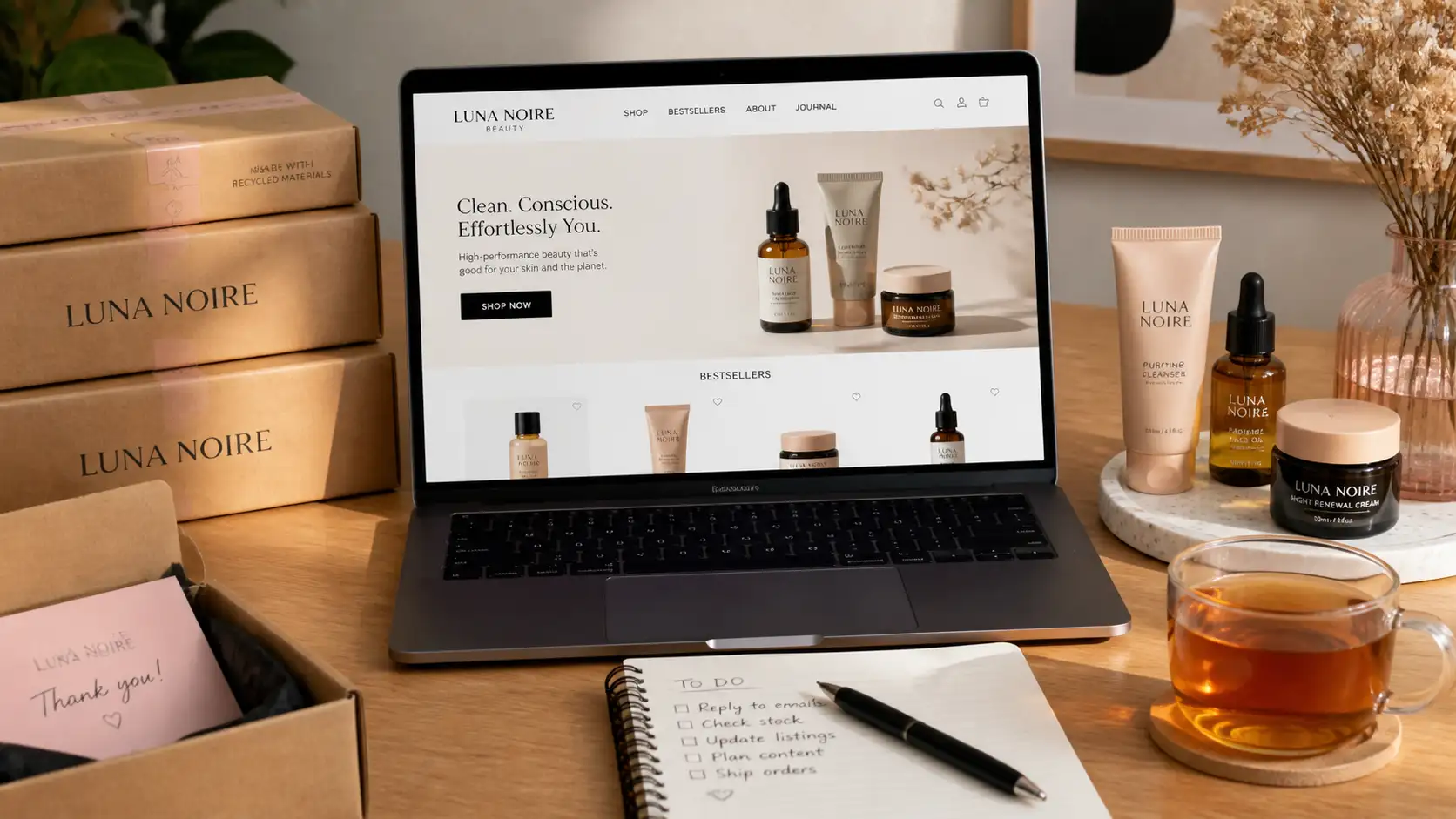
To retain healthy margins and build direct customer relationships, direct-to-consumer (D2C) web commerce must serve as your brand's flagship home. Relying solely on third-party marketplace platforms strips away your brand equity, leaves you vulnerable to sudden fee hikes, and deprives you of first-party consumer data needed for long-term replenishment cycles.
The Essential Cosmetic Storefront Experience
Cosmetic e-commerce presents unique conversion friction: shoppers cannot physically touch, smell, or swatch formulas on their wrists before purchasing. Your digital architecture must bridge this tactile gap through intentional UI/UX design:
- Multi-Skin Swatch Visualizers: Feature unedited, high-definition photography of every shade swatched across pale, medium, olive, and deep complexions under standardized daylight.
- Full INCI Transparency: Display searchable, clean ingredient breakdown panels on every product page to satisfy educated skincare and makeup shoppers.
- Interactive Shade-Matching Tools: Simple questionnaire logic that maps a customer's undertone, skin type, and coverage preference to their ideal shade recommendation.
- Automated Replenishment & Abandoned Cart Triggers: High-performing cosmetic stores deploy instant messaging workflows. For instance, brands utilizing platforms with native WhatsApp CRM can automate abandoned checkout recovery, send order status updates, and trigger automated replenishment reminders after 60 days when mascara or setting mist typically runs low.
Streamlining Your Commerce Stack with GoHato
In traditional setups, a growing beauty merchant must stitch together a dozen disconnected subscriptions: one platform for the storefront, another for email automation, an expensive third-party integration for WhatsApp messaging, separate apps for inventory management, and specialized invoicing plugins. As operational overhead mounts, founders spend more time troubleshooting plugins than refining formulations.
To solve this operational fragmentation, modern D2C founders turn to unified commerce solutions like GoHato (an innovative US-based commerce technology platform). GoHato unifies mobile-optimized storefront themes, product catalog merchandising, built-in WhatsApp CRM powered by official Meta APIs, and localized payment gateway processing (including seamless UPI and COD verification workflows for Indian markets alongside global payment options). At an accessible standard pricing of US$19/month internationally (with a special discounted offer of ₹1,000/month for Indian merchants), founders retain full ownership of customer relationships without bleeding capital on complex software ecosystems.
9. Go-To-Market Strategy, Seeding & Retention
When launching your own cosmetics venture, building anticipation prior to inventory arrival is mandatory. If you unveil an empty online store on launch day without pre-warmed demand, you will face high customer acquisition costs (CAC) that quickly erode your working capital.
The 90-Day Beauty Launch Timeline
- Day -90 to -60 (The "Behind-the-Lab" Narrative): Document your formulation process on TikTok and Instagram Reels. Share real footage of lab visits, pigment mixing, wear tests at the gym, and packaging selection. Authenticity and transparency establish emotional rapport long before pre-orders open.
- Day -60 to -30 (VIP Seeding to Micro-Creators): Curate an outreach list of 100 to 200 beauty micro-creators (5,000 to 40,000 followers) who specialize in your specific niche (e.g., sensitive skin, clean beauty, hyperpigmentation). Send beautifully packaged unboxing samples without demanding transactional reviews. Micro-creators provide genuine testimonials and generate authentic User-Generated Content (UGC) that outperforms polished studio ads.
- Day -30 to Launch (Waitlist & Shade Pre-Reservation): Publish an editorial landing page offering exclusive early access, a deluxe travel-sized applicator gift, or guaranteed launch-day stock reservation in exchange for email and WhatsApp sign-ups.
- Launch Day & Beyond (The Unboxing Wave): Coordinate creator reviews to go live across social channels simultaneously on launch morning, creating synthetic cultural momentum and social proof that drives immediate conversion volume.
Cosmetics boast naturally high repurchase rates. A satisfied customer finishes their brow pencil every 8 weeks and their foundation every 12 weeks. Implement post-purchase automated sequences that share application tutorials on Day 3, check in on shade satisfaction on Day 14, and suggest complimentary products on Day 30.
10. Operations, Inventory Batches & Cash Flow
Managing inventory for color cosmetics requires disciplined tracking. Unlike apparel or electronics, cosmetics feature biological shelf-life limits dictated by microbial preservation and active ingredient degradation.
Every commercial batch must be assigned a unique Lot Number printed on both the primary container and secondary carton. Lot tracking enables rapid, surgical containment in the rare event of a quality defect or recall. Furthermore, you must track your Period After Opening (PAO) symbol—indicated on labels by an open jar graphic showing numbers such as 6M (6 months) for liquid mascaras and eye products, or 12M/24M for pressed mineral powders and anhydrous lipsticks.
As reorders expand, balance your cash conversion cycle carefully. If your laboratory demands a 50% deposit upon purchase order and 50% prior to dispatch, with an 8-to-12-week production lead time, your capital remains locked up for months before generating revenue. Maintain tight communication with your manufacturer to stagger production runs and avoid stockouts during high-demand holiday quarters.
11. Realistic Startup Cost Breakdown Table
To help you accurately plan your capital requirements, review this transparent financial model comparing three common launch approaches for a new makeup business:
| Expense Category | Bootstrapped Private Label (1 Hero SKU) | Mid-Tier Indie Brand (3–4 SKUs / Shades) | Full Custom Formulation (6–8 SKUs) |
|---|---|---|---|
| Formulation Samples & Setup | $350 – $700 | $1,500 – $3,000 | $8,000 – $15,000 |
| Initial Inventory & Bulk Production | $2,500 – $4,500 | $8,000 – $16,000 | $30,000 – $55,000 |
| Safety, Microbial & Stability Testing | $0 (Included in private label) | $800 – $2,000 | $4,500 – $9,000 |
| Primary & Secondary Packaging | $800 – $1,500 | $3,500 – $6,500 | $12,000 – $25,000 |
| Regulatory Filings & Legal Licensing | $300 – $800 | $1,200 – $2,500 | $3,500 – $7,000 |
| Branding, Identity & Graphic Design | $400 – $1,200 | $2,000 – $4,500 | $6,000 – $12,000 |
| E-commerce Storefront & Tech Stack | $200 – $500 | $600 – $1,800 | $2,500 – $6,000 |
| Initial Seeding Kits & Launch Marketing | $600 – $1,500 | $2,500 – $6,000 | $10,000 – $25,000 |
| Total Estimated Initial Investment | $5,150 – $10,700 | $20,100 – $42,300 | $76,500 – $154,000+ |
12. Frequently Asked Questions
Do I need a cosmetic chemistry degree to launch my own makeup brand?
No, you do not need a background in cosmetic science. The overwhelming majority of beauty founders partner with established contract manufacturers, private label labs, or freelance formulation chemists who manage bulk chemical stability, preservative efficacy, and regulatory paperwork. Your core responsibility as a founder is brand positioning, shade curation, product feedback, packaging aesthetics, and customer acquisition.
What are the typical profit margins in a direct-to-consumer makeup business?
Color cosmetics offer some of the highest gross margins in consumer retail, typically ranging between 75% and 85%. This healthy margin profile (produced by a 4x to 6x markup over Cost of Goods Sold) is necessary to absorb customer acquisition costs, influencer sample seeding, fulfillment overhead, and ongoing inventory reinvestment.
Is it legal to formulate and sell cosmetics made at home?
While blending anhydrous powders or simple lip balms in your home kitchen is technically permitted in certain US states under specific conditions, doing so is highly discouraged and often illegal internationally under Good Manufacturing Practice (GMP) regulations. Water-based cosmetics (foundations, mascaras, liquid blushes) easily harbor dangerous fungal and bacterial pathogens without cleanroom sterilization, climate control, and industrial homogenization. Always use an ISO 22716 / GMP-certified lab facility.
How many products should I include in my initial cosmetic launch?
Focusing on 1 to 3 hero SKUs (or a single hero product offered across 3 to 6 curated shades, such as a signature lip oil or liquid blush) is significantly more effective than releasing a 30-product line. A focused launch preserves your cash reserves, simplifies messaging, speeds up regulatory testing, and prevents costly dead stock.
What legal licenses are required to start a cosmetic line?
At a minimum, you must register a formal business entity (such as an LLC or Private Limited Company), obtain general liability and product liability insurance, and register your business and cosmetic product formulas with regional health authorities (e.g., MoCRA registration in the US, CPNP notification in the EU, or CDSCO licensing in India). Your contract manufacturer must also provide verified Certificates of Analysis (CoA) demonstrating microbial, stability, and heavy metal compliance.
How can I test makeup shades without spending thousands on samples?
Partner with private label laboratories that offer pre-assembled sample discovery kits. For $50 to $200, manufacturers provide sets of standard pigment formulations in small vials. This lets you inspect texture, undertone dispersion, and skin payoff before committing to commercial production runs.
Ready to Build & Scale Your D2C Beauty Brand?
Launch your beauty storefront with modern, mobile-first themes, integrated WhatsApp CRM for abandoned cart recovery, automated customer notifications, and unified order management.