Takeaway EPOS: The Complete Guide to Hardware, Cloud Software & Commission-Free Direct Orders
Discover how modern takeaway EPOS systems unify phone orders, counter queues, kitchen display monitors, and direct customer delivery channels into a single, high-margin hospitality engine.
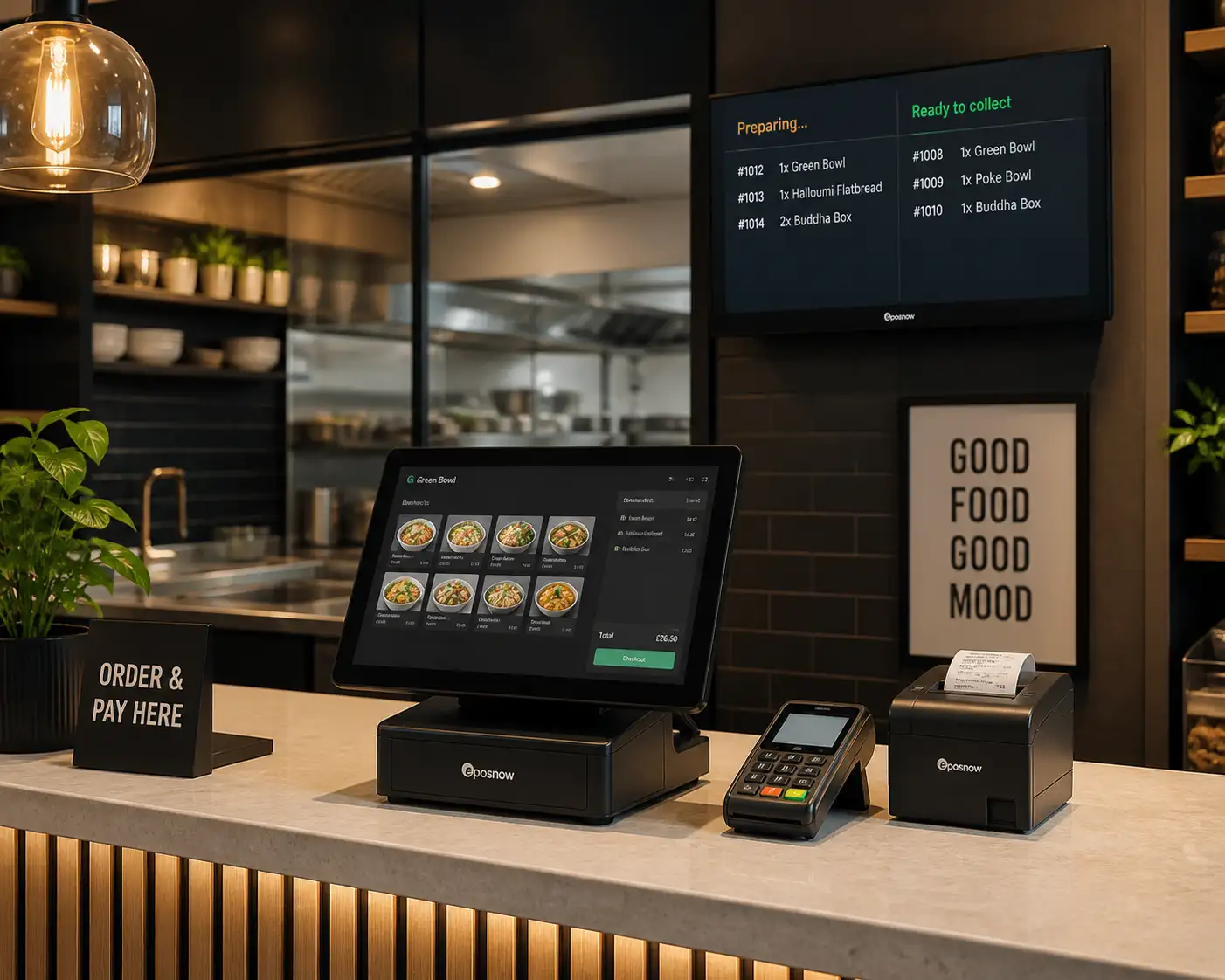
- Core Architecture: A purpose-built takeaway epos combines high-speed counter ordering, caller-ID customer lookup, multi-station kitchen routing, and integrated delivery dispatch.
- The Aggregator Dilemma: Relying purely on third-party aggregators strips 20% to 35% in commission fees; deploying integrated epos software for takeaway allows food venues to capture direct orders via web, mobile, and WhatsApp.
- Specialized Operational Needs: Niche venues like Chinese takeaways and curry houses require dual-language kitchen tickets, complex set-menu modifier matrixes, and driver cash-reconciliation modules.
- Software Selection Realities: While promises of takeaway epos software free sound appealing, operators must watch out for locked card-processing markups, hidden hardware leases, and missing live customer support.
- Modern Omnichannel Growth: Modern cloud platforms such as GoHato empower food and lifestyle brands to eliminate disjointed SaaS subscriptions by unifying direct digital storefronts, WhatsApp CRM order tracking, and inventory control.
1. What is a Takeaway EPOS System?
An electronic point of sale (EPOS) tailored specifically for takeaways is not merely a computerized cash register. A takeaway epos is an operational nervous system designed to manage rapid customer interactions, multi-channel order ingestion, split-second kitchen routing, driver dispatch logistics, and customer relationship data.
Unlike standard sit-down restaurant point-of-sale systems—which prioritize table layout maps, reservation seating charts, and complex split billing across prolonged dining sessions—an epos for takeaway focuses on throughput velocity, item modifiers, phone number recognition, pickup scheduling, and delivery driver tracking.
The Takeaway Throughput Equation
In a bustling fish and chip shop, gourmet pizzeria, burger bar, or noodle counter, peak dinner rushes happen within compressed two-to-three-hour windows on Friday and Saturday evenings. Every wasted tap on a touchscreen, illegible paper ticket, or delayed driver reconciliation directly decreases order output and cuts net profit.
Whether processing counter orders, walk-ins, phone calls, or digital app bookings, modern takeaway EPOS systems synchronize data across the front counter, the kitchen, and delivery fleets in real time.
2. Essential Hardware & Software Components
Deploying a resilient takeaway counter requires matching high-performance cloud software with rugged commercial hardware capable of withstanding steam, grease, flour dust, and continuous physical contact.
Spill-Resistant Touch Terminals
Heavy-duty, IP-rated capacitive touchscreens (14-inch to 15.6-inch displays) with true-flat glass surfaces that resist grease splatter and liquid spills while facilitating rapid menu navigation.
Thermal Kitchen & Receipt Printers
High-speed thermal printers (80mm) for front-counter customer bills, alongside heavy-duty impact/matrix ribbon printers for hot kitchen stations that withstand steam without blackening receipt paper.
Caller ID Integration (VoIP & PSTN)
Hardware modems or VoIP hooks that detect incoming customer phone numbers instantly, pulling up the client's past order history, favorite dishes, delivery address, and food allergy notes before the operator says hello.
Kitchen Display Systems (KDS)
Digital bump bars and commercial tablet screens placed over chef preparation stations. KDS units color-code tickets by prep time, group identical orders (e.g., batching chow mein or fries), and eliminate lost tickets.
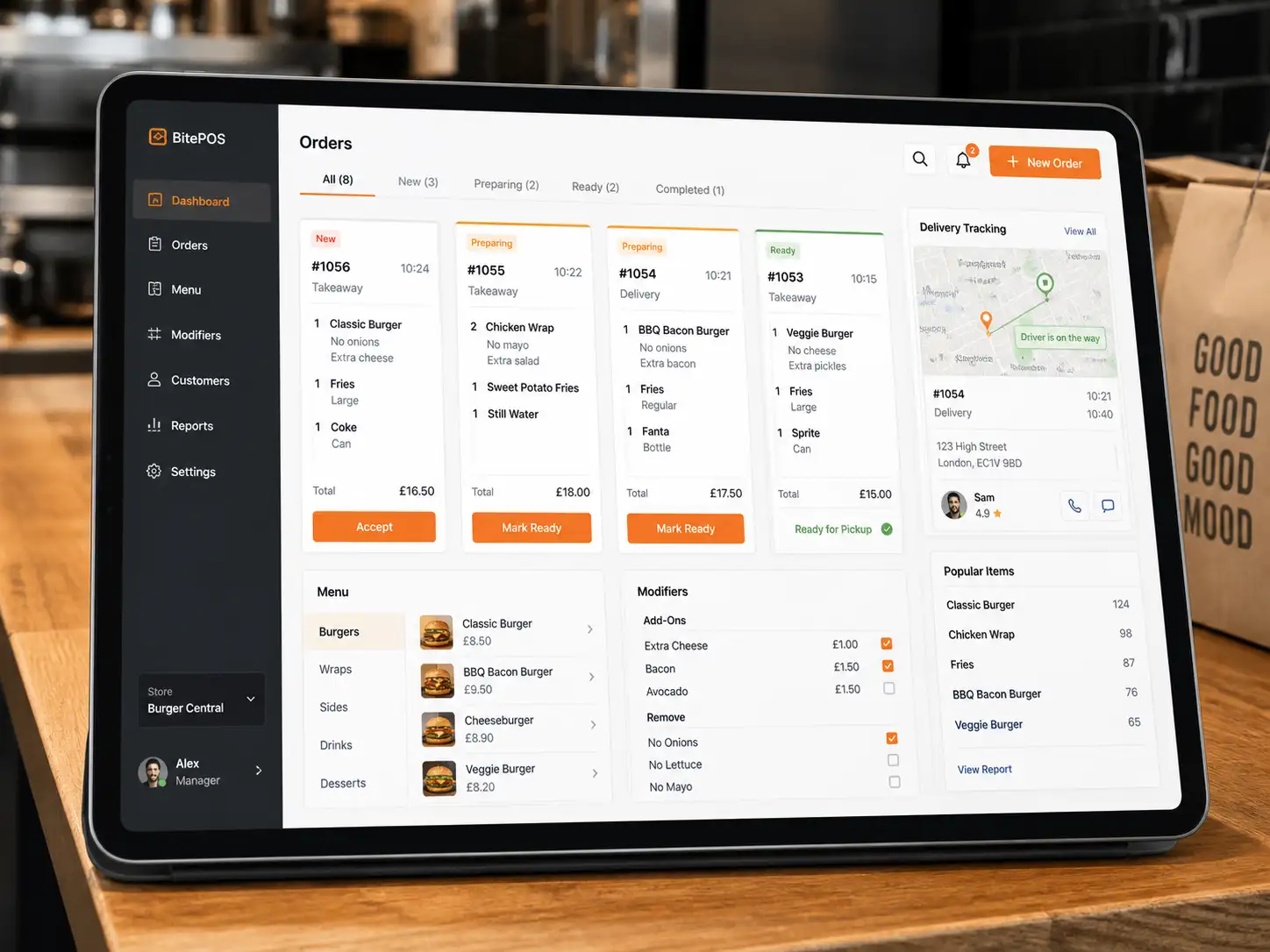
Beyond hardware, the back-office management software controls menu variants, price tiers (collection discounts versus delivery markups), driver commission calculations, and end-of-day X/Z cash drawers balances.
3. How EPOS Software for Takeaway Solves Bottlenecks
Investing in reliable epos software for takeaway establishments addresses the chronic operational friction points that lead to food waste, customer complaints, and lost revenue.
Rapid Order Entry & Complex Modifiers
Takeaway orders are rarely uniform. Customers ask for "no onions," "extra spicy chili oil on the side," "gluten-free bun," or custom sauce swaps. Legacy mechanical tills or generic retail cash registers cannot handle nested modifier trees. Dedicated takeaway systems allow staff to punch in combinations with two taps, immediately printing standardized, easily legible preparation instructions for chefs.
Intelligent Driver Dispatch & Geocoding
Manual dispatching—where counter staff yell addresses at delivery drivers or shuffle paper slips—is fraught with error. Modern software integrates postcode lookups and Google Maps APIs to calculate accurate delivery charges based on radius or drive time, group orders by delivery zone, and calculate driver fuel allowances or per-drop compensation automatically.
Allergen Compliance & Natasha’s Law
Food safety compliance has become a major legal obligation across Europe, the UK, North America, and Australia. Advanced takeaway software tracks 14 major allergens (peanuts, gluten, molluscs, lupin, celery, etc.) against every recipe ingredient. When a customer identifies an allergy or orders online, the system flags recipe conflicts, highlights warnings on kitchen dockets, and prints ingredient stickers for pre-packaged takeaway cartons.
4. Evaluating Takeaway EPOS Software: Free vs Paid
Small food businesses and startup cloud kitchen operators frequently search for takeaway epos software free download offers to minimize initial capital expenditure. However, the hospitality technology sector operates on real commercial dynamics, making it vital to distinguish between genuinely sustainable software models and deceptive hidden pricing.
The Hidden Costs Behind "Free" EPOS Software
When an EPOS platform is advertised as 100% free with no monthly subscription, the platform provider generates revenue through alternative channels:
- Locked Payment Processing: Many "free" systems require you to sign an exclusive merchant account with payment processing fees exceeding 2.75% to 3.5% plus transaction fees, compared to standard interchange rates of 1.2% to 1.6%. A takeaway doing £30,000 monthly can lose £400 to £600 extra every month in inflated card rates alone.
- Proprietary Hardware Lock-In: The software may cost £0, but only operates on specific proprietary touchscreens sold at 200% above open-market Android or iPad hardware prices.
- Paywalled Essential Features: Essential functionality—such as caller ID lookup, multi-printer kitchen routing, online ordering sync, or automated SMS alerts—is locked behind costly add-on packages.
- No Live Weekend Phone Support: If a free till crashes on a Friday evening at 7:30 PM, free-tier users rarely have access to live phone technicians, leaving counter staff unable to process card payments.
| Feature / Parameter | "Free" Takeaway Software Model | Professional Commercial Cloud EPOS |
|---|---|---|
| Monthly Software Fee | £0 / $0 (Initial entry) | Predictable flat fee (e.g., $19/mo or £30-£60/mo) |
| Payment Processing | Mandatory tied processor (often 2.5% - 3.8%) | Open payment gateway choice or competitive rates |
| Hardware Compatibility | Often locked to supplier hardware | Open Android, iOS, Windows, or standard tablets |
| Caller ID & Postcode Data | Usually paid monthly add-on | Built-in standard feature |
| Direct Online Ordering | Subcontracted or charges high per-order cut | Commission-free integrated web storefront |
| Support Availability | Community forums or delayed email tickets | 24/7 dedicated telephone and live chat support |
For independent food operators, choosing an affordable, transparent cloud subscription platform always provides superior return on investment compared to opaque "free" software that levies heavy toll fees on transaction volume.
5. Deep-Dive: EPOS System for Chinese Takeaway & Asian Cuisines
A specialized subcategory within fast-paced hospitality is the epos system for chinese takeaway, along with Thai, Vietnamese, and Pan-Asian noodle bars. These culinary operations possess unique characteristics that cause generic retail or western cafe tills to fail.
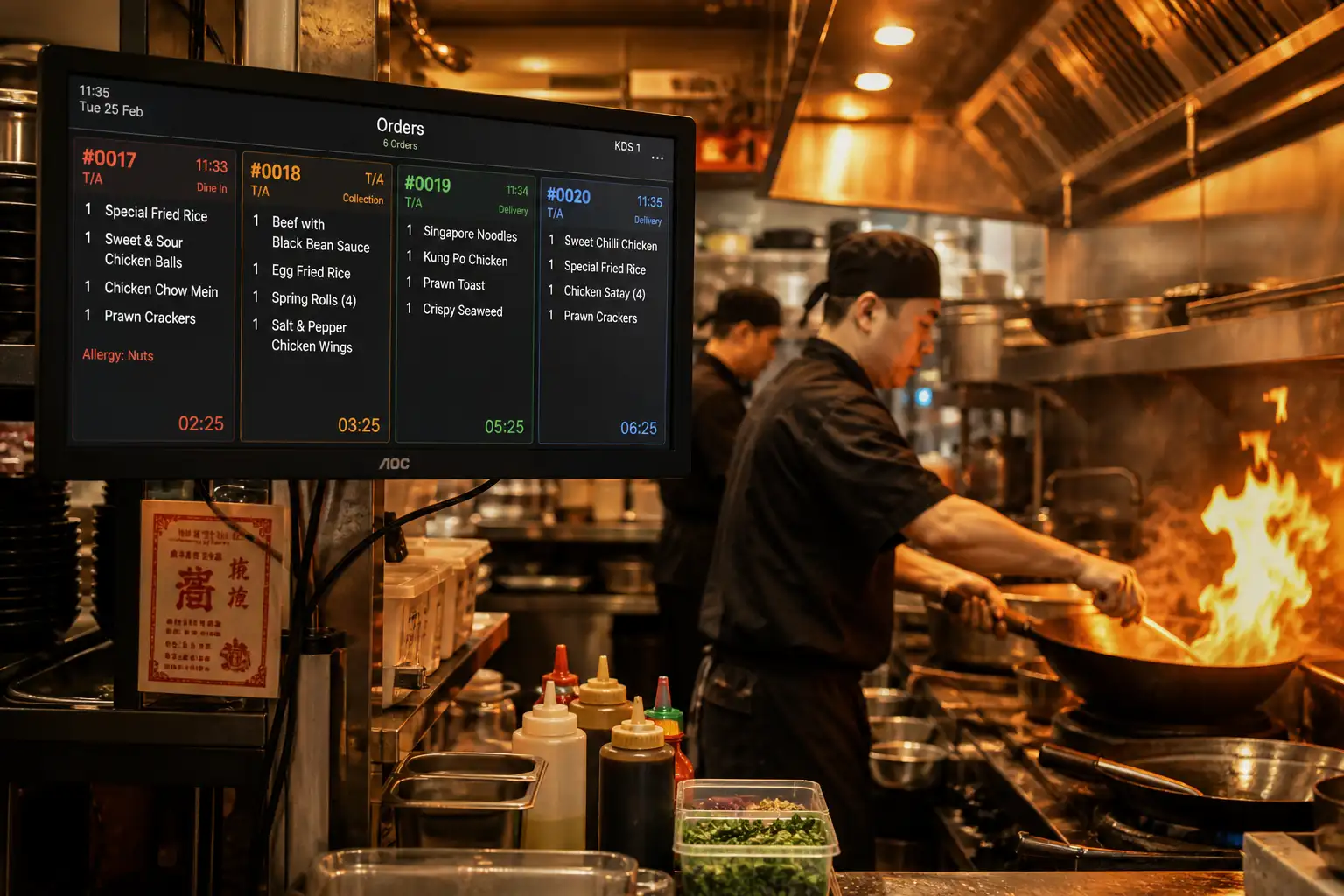
1. Dual-Language Printing (English & Chinese Characters)
In many family-run Asian food establishments, counter staff input orders in English, while master wok chefs and kitchen staff prepare dishes by reading Traditional or Simplified Chinese characters. A dedicated Chinese takeaway POS instantly prints dual-language tickets: English for customer bags and receipts, alongside clear Chinese characters on kitchen impact dockets (e.g., 豉椒牛肉 for Beef in Black Bean Sauce, 乾炒牛河 for Dry Fried Beef Chow Fun).
2. Extensive Menu Item Numbers & Quick-Code Dialing
Traditional Chinese takeaway menus often encompass 120 to 250 distinct menu numbers (e.g., 42A, 118, 77). Counter staff who have worked in the trade for decades remember code numbers rather than typing out lengthy descriptive dish names. The EPOS must support instant numerical keypad entry—punching "42 + Enter" must register Sweet & Sour Chicken Balls immediately.
3. Complex Set Menus & Free Promotional Thresholds
Asian takeaway operations frequently deploy nuanced promotional logic:
- Automatic Freebies: Automatically adding a bag of prawn crackers on orders over £20, or complimentary spring rolls and mini vegetable rolls on orders over £35.
- Customizable Set Dinners: "Special Dinner for 2" permitting a choice between Wonton Soup or Chicken Sweetcorn Soup, paired with a selection of three mains from a list of thirty dishes, with optional egg fried rice upgrades.
- Split Dish Combinations: Split containers such as "Half Rice, Half Chips with Curry Sauce over Top."
An EPOS lacking nested modifiers forces counter clerks to hand-write slips, creating chaotic order misunderstandings and customer disputes.
6. Reclaiming Margins: Direct Digital Ordering vs Aggregators
Third-party food marketplace portals (such as Just Eat, Deliveroo, Uber Eats, and Swiggy) provide initial discoverability for newly opened venues. However, their 20% to 35% commission rates swallow the slim 10% to 15% net margins typical of the restaurant sector.
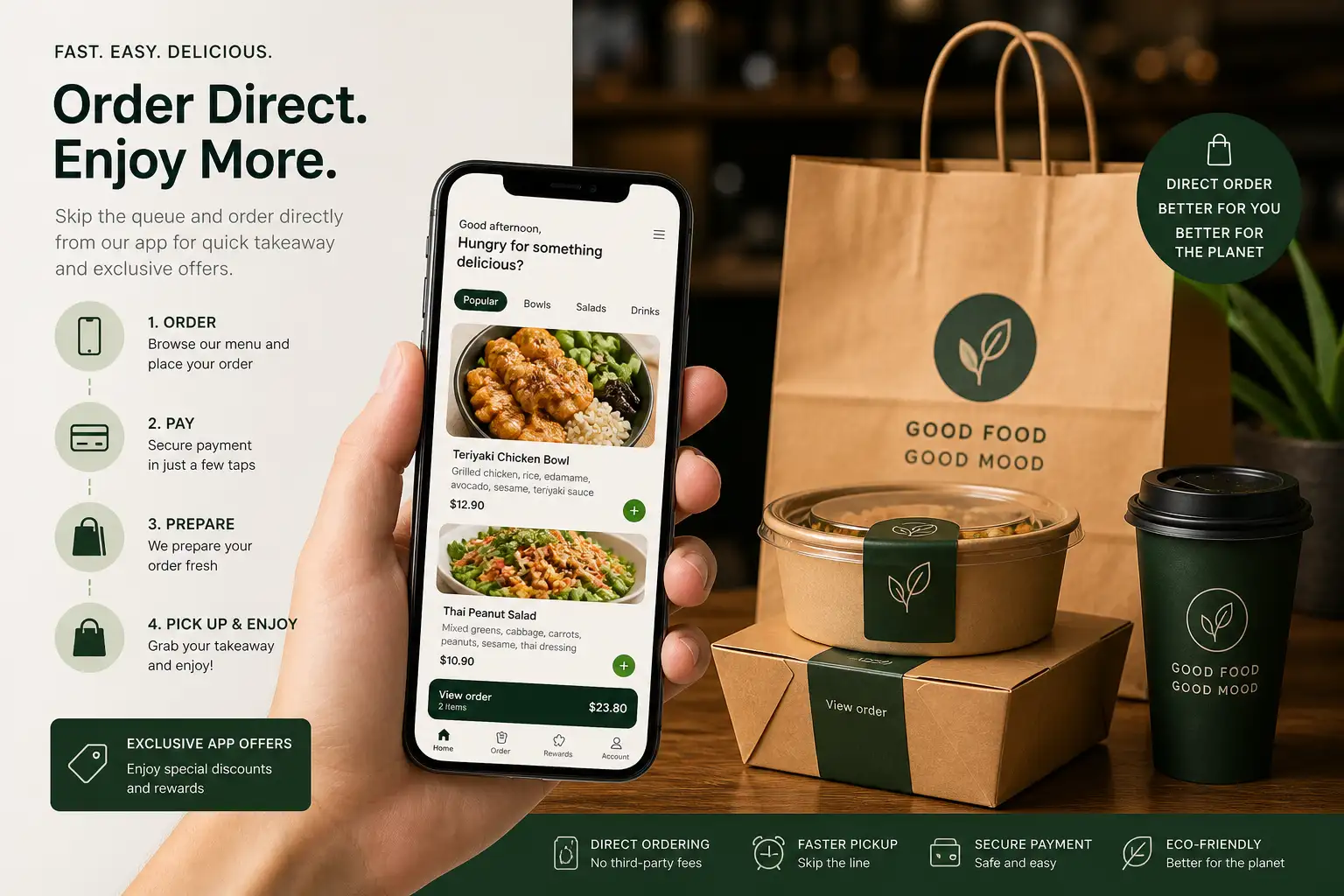
The Hidden Costs of Aggregator Dependency
When an operator relies entirely on third-party food apps, they forfeit more than cash margin:
- No Customer Data Ownership: The aggregator hides customer phone numbers, delivery addresses, and email identities behind masked relays, preventing you from marketing directly to regular diners.
- Brand Substitution: Third-party apps place direct competitor advertisements on your listing page, encouraging your regulars to sample other restaurants.
- Arbitrary Refunds: Delivery platforms frequently issue automated refunds for slight delays, deducting the full order value directly from the merchant's payout balance without operational recourse.
For independent food brands looking to eliminate excessive platform dependencies, examining top ecommerce platform alternatives reveals how unified direct-to-consumer digital channels help businesses retain 100% of their customer revenue.
7. Takeaway EPOS Feature Comparison Matrix
When selecting the ideal epos software for takeaway operations, cross-examine candidate platforms against this checklist of mandatory functionality:
| Capability | Basic Retail POS | Standard Restaurant POS | Dedicated Takeaway EPOS |
|---|---|---|---|
| Fast Counter Checkout | Yes (Barcode-centric) | Moderate (Table-oriented) | High (Quick-touch grid & codes) |
| Dual Pricing (Collection vs Delivery) | No | Rare | Yes (Automatic price rule toggles) |
| Caller ID Phone Lookup | No | Optional module | Native & instant |
| Kitchen Display Routing | No | Yes | Yes (Station split & bump bar) |
| Driver Cash Reconciliation | No | No | Yes (Float, fuel & drop-off audit) |
| Direct Web & Mobile Orders | Requires 3rd party add-on | Requires integrations | Direct integrated sync |
| Customer WhatsApp Updates | No | Rare | Yes (Order live dispatch alerts) |
| Allergen Warning Matrix | Basic text notes | Menu level | Item & ingredient-level enforcement |
8. Step-by-Step Implementation & Migration Plan
Replacing an aging till or moving from legacy paper slips to a fully digital point-of-sale infrastructure requires systematic planning to avoid downtime during busy trading hours.
-
Audit Menu Modifiers & Categories
Digitize your full food menu into structured categories, items, variant sizes (regular, large), and nested modifiers (sauce options, sides, dietary exclusions). Clean up duplicate items before system ingestion.
-
Network & Thermal Printer Cable Infrastructure
Ensure your kitchen and counter rely on wired Cat6 Ethernet cables for printers and primary POS terminals whenever possible. While 5GHz Wi-Fi is suitable for handheld waitstaff tablets, grease and stainless steel kitchen walls can disrupt wireless signals during busy service windows.
-
Setup Caller ID & Customer Database
Connect your telephone line to a compatible hardware modem or configure cloud VoIP SIP trunk routing so customer phone numbers populate automatically on the order entry screen.
-
Kitchen Station Splitting
Route cold appetizers, salads, and drinks to front-of-house thermal printers, while routing deep-fryer, wok, pizza-oven, and grill items to specialized high-temperature kitchen printers or digital KDS screens.
-
Staff Simulation & Speed-Drill Training
Conduct mock ordering drills during closed hours. Challenge counter clerks to enter 20 complex takeaway phone orders in under 15 minutes, verifying that kitchen tickets print correctly and driver delivery zones auto-calculate without hesitation.
9. Unifying Orders with GoHato Commerce & WhatsApp CRM
Modern food entrepreneurs, meal-prep brands, beverage producers, and boutique food retailers face an escalating challenge: managing too many disconnected software subscriptions. A typical food venue often pays separate monthly fees for an EPOS terminal, an online website builder, a third-party table-booking tool, an SMS notification platform, and an email newsletter service.
GoHato is an AI-powered commerce and operations platform engineered to dismantle this fragmented software stack. Positioned as a comprehensive modern alternative to traditional legacy setups, GoHato unifies direct online storefronts, inventory tracking, customer communication, and operations under a single, cohesive ecosystem.
Official WhatsApp CRM
Leverage official Meta Cloud API WhatsApp automation to deliver instant digital order receipts, live kitchen preparation milestones, and delivery driver dispatch tracking directly to your customers' preferred messaging app.
Zero Aggregator Tolls
Direct your loyal customers to your own custom-branded digital web catalog. Retain 100% of your basket value without sacrificing 30% cuts to third-party delivery marketplaces.
AI Merchandising & Menus
Utilize integrated AI capabilities to produce mouth-watering dish descriptions, generate high-converting promotional banners, optimize combo offerings, and analyze consumer sales patterns.
Transparent Global Pricing Model
GoHato provides an international standard pricing plan of US$19 per month, granting businesses complete enterprise-grade commerce capabilities without nickel-and-diming for core tools. For merchants in India, GoHato offers a special discounted rate of ₹1,000 per month, engineered with full support for UPI QR payments, automated GST invoicing, and cash-on-delivery (COD) verification workflows.
Whether you manage a boutique culinary store, a specialty roastery, or a multi-location lifestyle food brand, owning your customer relationships across web and mobile is the ultimate safeguard for sustainable commercial growth.
10. Frequently Asked Questions
What is the difference between an EPOS and a standard cash register in a takeaway?
A standard cash register only records monetary totals and opens a cash drawer. A takeaway EPOS coordinates your entire operation: it logs customer telephone numbers via caller ID, manages nested menu modifications, automatically splits orders between the counter and different kitchen stations, computes delivery zones and driver fees, tracks real-time inventory, and integrates with direct online ordering platforms.
Can I use a free takeaway EPOS software package reliably?
While several companies advertise free takeaway EPOS software, they typically offset the cost by mandating proprietary card payment processors with inflated merchant fees (often 2.5% to 3.8% per transaction), locking essential features like caller ID behind paid paywalls, or offering zero live weekend telephone support. Choosing a low-cost, transparent flat-rate cloud system is generally more cost-effective for busy venues.
Why do Chinese takeaways require specialized EPOS features?
Chinese takeaways operate at rapid speeds with extensive menus (often 150+ items). They require dual-language ticket printing (English for customer bags, Chinese characters for wok chefs), fast number-pad code entry (e.g., entering "45" for Kung Pao Chicken), and automated set-menu logic that handles free items like prawn crackers on qualifying basket sizes.
How does a takeaway EPOS help reduce food delivery aggregator commissions?
A modern takeaway EPOS pairs directly with your own commission-free online web and mobile ordering portal. By printing custom marketing flyers, offering loyalty points, or utilizing automated WhatsApp messages for re-orders, you can transition existing aggregator customers onto your direct ordering channel where you pay 0% marketplace commission.
Do I need an internet connection for my takeaway EPOS to function?
The best cloud-based takeaway EPOS systems include native offline mode. If your broadband connection drops during a busy shift, the terminals continue taking counter walk-in orders, printing tickets to local kitchen printers, and storing cash transactions. Once connectivity returns, the system automatically synchronizes sales data with the cloud.
How much does a commercial takeaway EPOS system cost to implement?
A typical single-terminal commercial takeaway EPOS package (including a touch terminal, thermal receipt printer, kitchen impact printer, cash drawer, and caller ID box) costs between £800 and £1,800 in upfront hardware. Cloud software subscriptions range from US$19/month (on platforms like GoHato) to £40–£80/month on legacy hospitality software.
Reclaim Your Margins with GoHato
Say goodbye to fragmented software bills and exorbitant 30% aggregator commissions. Build your custom direct-to-consumer digital ordering channel with built-in WhatsApp CRM, AI tools, and unified order management today.